Planning a Big Lap of Australia
How to plan a family Big Lap of Australia — time, direction, vehicle honesty and budget thinking without invented totals.
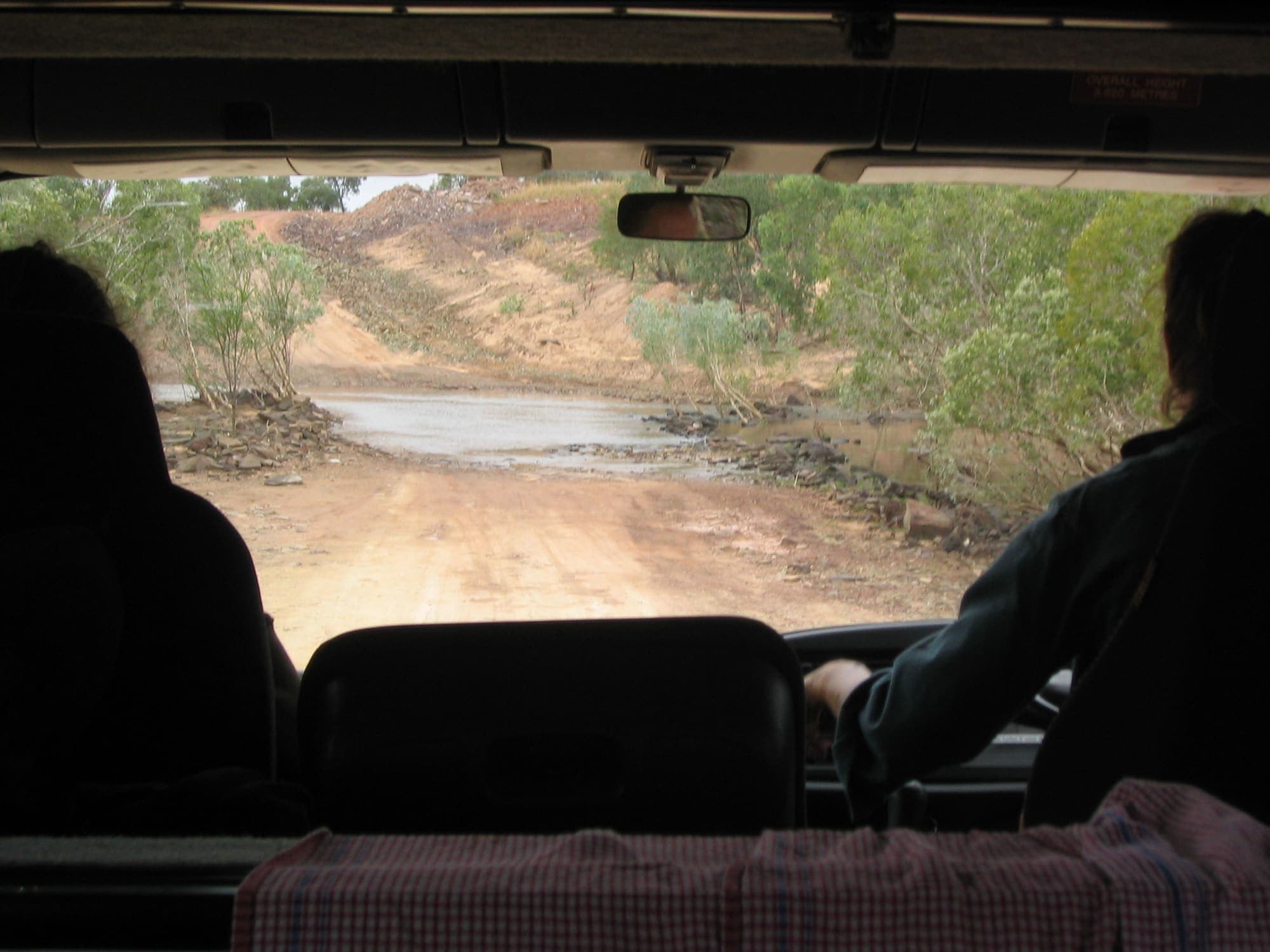
Gibb River Road, The Kimberley by Phil Whitehouse, CC BY 2.0. Source on Wikimedia Commons. Self-hosted locally. See the full image credits.
Planning a lap of Australia is less like booking a tour and more like designing a moving household. You are choosing how long you can be away, which roads you will treat as essential, and how you will handle school, work, repairs and rest. The phrase “Big Lap” is colloquial. There is no official start gate and no medal for finishing Highway 1 in a straight face.
This guide is for families. That changes the plan. Kids need shade, leftover dinner, and days that do not only exist to make kilometres. Adults need a way to be wrong without the trip collapsing. If you came here for a single PDF that tells you where to sleep on night 47, you are in the wrong journal. If you came here to make the core decisions that shape every lap, stay.
What does “planning a lap of Australia” actually mean?
It means you will circle the continent, mostly on the around-Australia highway network, and you will decide which inland shortcuts and which remote tracks are in or out. Some families stay on sealed roads and call that a lap. Others add the Gibb River Road, Palm Valley, or a swing past William Creek. Those additions are not “the same trip with extra photos”. They change skill, recovery, insurance conversations and how you read a weather forecast.
Planning also means logistics that do not appear on tourist maps: where you will do laundry, how you will get a tyre, whether a grandparent can meet you in a city, whether someone has a medical appointment that cannot move. Write those down first. The gorges will still be there.
Is a Big Lap right for you?
A lap suits households that can travel slowly, reset weekly, and treat a closed road as information rather than insult. It is a poor fit if the only available window is a short school-holiday dash through the northern wet, or if the budget only works if every night is unpaid camping on land you have not checked. Read free camping Australia before you romanticise free nights.
It is also a poor fit if nobody in the vehicle can change a wheel, read a road report, or say “we stay in town today”. You do not need to be an expeditioner. You do need to be a functioning small team.
If a year away is impossible, you still have family camping and regional road trips. A lap is optional. Loving the outdoors is not a membership tier.
The core decisions that shape every Big Lap
Budget and cost expectations
People search for “Big Lap Australia cost” because they want a number that makes the decision feel finished. This journal will not invent one. Fuel moves. Park booking fees belong to the agency or operator that collects them. Food costs whatever your household already spends, plus the premium of small-town shops. Maintenance is a function of age, load and luck.
Build a budget with lines and buffers. Include a rest-town night when everyone is sick of the tent. Include the possibility of a repair. Then check live park pages when you are a week out from a place you care about. Parks Australia and the state park services publish current pass and booking information. Use those, not a remembered video.
If a stranger quotes a weekly total, that is their diary. Your kids eat differently. Your fridge is different. Your definition of a treat is different.
How long you plan to travel
How long does the Big Lap take? The honest answer is: as long as you will still be kind to each other. A household that drives most days on sealed highways can complete a loop in a handful of months. A household that wants Kakadu and Litchfield, a Kimberley chapter, and unhurried Red Centre days will eat more calendar.
Think in sketches, not commandments:
- A shorter sketch (people often say three months) is a moving loop with fewer side tracks and fewer empty days. It can work for a leave window. It punishes indecision.
- A middle sketch (people often say six months) allows a northern dry-season chapter and a southern winter or spring chapter if you time it.
- A longer sketch (people often say twelve months) is the one that can absorb guests, a week of school-by-the-picnic-table, and a road closure without rewriting the year.
None of those sketches is morally better. The twelve-month version is not more authentic. The three-month version is not more efficient in any sense that matters to a tired eight-year-old.
Timing is everything
Northern Australia has a wet season. Roads close. Parks change what you can reach. Smoke, heat and school terms also shape the south. Timing is the art of not arriving at a famous waterfall in a week the park has closed the pool, and not arriving on the Gibb because a blog said “August is magic” without reading Main Roads Western Australia that morning.
If the Kimberley is on your list, read the Kimberley hub before you lock a direction. If the Top End is on your list, read NT Parks and the Kakadu pages in the same week you book a rest cabin — if you book one. This guide will not invent cabin tariffs.
Clockwise vs anticlockwise – which way should you go?
Direction is a seasonal and family-logistics choice. It is not a personality test. The dedicated clockwise versus anticlockwise guide works through the usual east-coast and west-coast starts. The short version: pick the direction that puts you in the north in a season the roads are more often open, and that puts you near a city when you need parts, people or a birthday party.
Clockwise and anticlockwise both work. The failed trips are the ones that pick a direction to win an argument and then refuse to sit out weather.
Choosing a vehicle and setup
There is no best car for the Big Lap of Australia. There is an honest car.
If you will stay on the sealed loop, reliability, service access and space may matter more than low range. Plenty of families have circled on ordinary vehicles because they never promised themselves the Gibb. If you will add remote tracks, you need a vehicle and tyres that match those tracks, plus recovery equipment you have practised with, plus a plan for when you cannot recover yourself.
Caravans, camper trailers, roof tents and a boot full of family camping gear each change turning circles, bookings and how you feel about a 40-degree afternoon. Tow something only if you will still be patient at a fuel bowser and a tight campground.
Do not buy a more complicated rig to justify a trip you have not scoped. Scope first. Shop second. The camping gear checklist is a thinking list, not a dare.
Sample 12-month thinking (not a locked itinerary)
A year-shaped lap, clockwise from the south-east, often looks like a south-coast and upland autumn, a northward winter and early dry, a northern mid-year chapter, and a western or southern finish that avoids the worst of the wet on the tracks you care about. Anticlockwise flips the coasts. Inland cut-throughs via the Red Centre can shorten or enrich the loop.
This is thinking, not a booking sheet. Parks close. Families get tired. A useful year plan has empty weeks on purpose.
Why you can trust this guide
You can trust it to refuse fake numbers. You can trust it to send you to Parks Australia, Explore Parks WA and state road agencies for the live facts. You cannot trust it — or anyone — to drive the vehicle for you. General information is not advice.
When you have the core decisions on paper, read the Big Lap hub as a short recap, then the direction guide, then the place hubs you actually intend to visit. Leave the rest of the internet’s itineraries in a folder labelled “someone else’s holiday”.
People, school and the weekly reset
A lap is a social object. Someone will want to meet you in a city. Someone will get sick. A child will refuse the tent on the same week a park closes a pool. Leave space for those facts in the calendar you pretend is firm.
If you are travel-schooling, prepare before you leave the driveway. If you are squeezing a loop into a leave window, cut chapters, not sleep. The kids outdoors hub exists so the trip is not only driving.
Write a weekly reset and keep it: washing, food, a walk, a call. That reset is how a three-month sketch and a twelve-month sketch both stay human.
Filed under big lap, family. Return to the Big Lap hub.
Questions families ask
- How long does it take to do the big lap around Australia?
- As long as your household can travel well — often a few months for a moving sealed loop, or a longer season or year if you want parks and rest days.
- How much does it cost to travel the Big Lap of Australia?
- Whatever your fuel, food, sites, insurance and maintenance add up to at your pace. There is no honest single average to quote here.
- How do I plan the Big Lap in Australia?
- Decide time away, sealed versus remote roads, direction versus the northern wet, and a vehicle that matches those roads — then check park and road agencies as you go.
- What is the best car to take on the Big Lap of Australia?
- The reliable vehicle that fits your people and the roads you will actually drive, not a trophy four-wheel drive you never take off the bitumen.
Pitch a family travel note
This journal welcomes considered guest posts on family camping and Australian road travel. Editorial citations stay followed; paid placements are marked sponsored.
Contact the desk about a guest post · Browse the adventure journal