Gibb River Road with kids
A family guide to Gibb River Road difficulty, timing, vehicles and gorge days — with live conditions from Main Roads WA and parks.
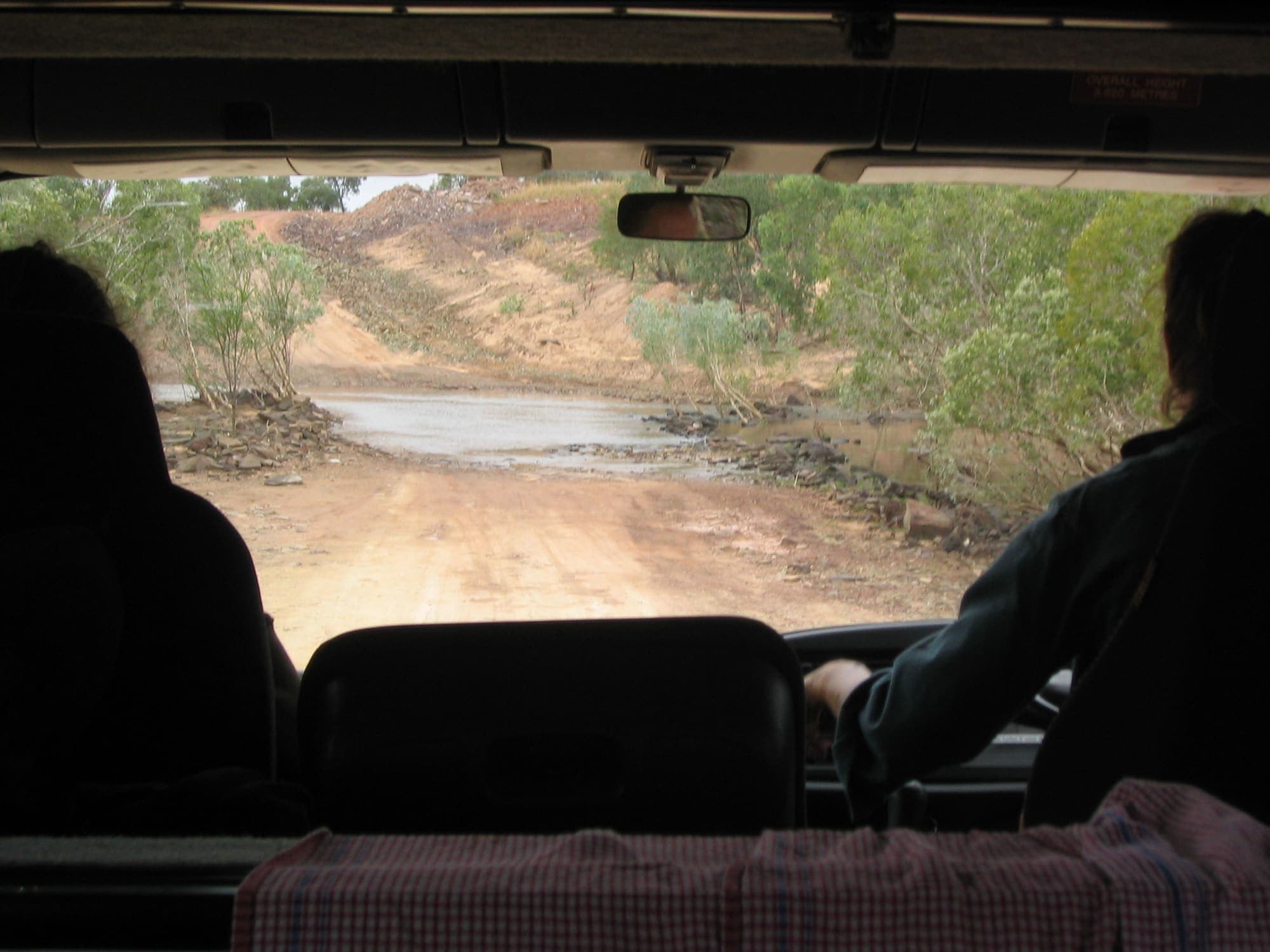
Gibb River Road, The Kimberley by Phil Whitehouse, CC BY 2.0. Source on Wikimedia Commons. Self-hosted locally. See the full image credits.
The Gibb River Road is a remote Kimberley track with a cattle-route past and a visitor present. Families come for gorges, station country and the feeling of a long red road. Kids come because the adults brought them, which is a different motivation and a better planning constraint. This guide is for the second group.
It will not reprint the old journal’s station diaries. It will not impersonate anyone who crossed in 2016. It will tell you how to think about days, difficulty, vehicles and timing, then send you to Main Roads Western Australia and Explore Parks WA on the morning you leave Broome or Kununurra.
How many days do you need?
Count two clocks. The driving clock is the corridor between the western and eastern bookends. The walking clock is every gorge, lookout and swim you actually came for. Families who only “do the Gibb” as a transit can use a short number. Families who want a station night, a rest day and a walk that is not at noon will need more.
There is no honest mandatory day count. Anyone who sells you one is selling a brochure. Heat, corrugations and a child who did not sleep will stretch a tidy plan. Build an empty day into the middle. If you do not use it, you sit under a tree. That is still a successful Kimberley day.
Side tracks are not free. The Kalumburu road, station spurs and anything that looks like a shortcut on a phone screen can be harder than the Gibb itself. Treat each as its own decision. The Kimberley hub exists so you remember the region is larger than one road.
How difficult is the Gibb River Road?
Difficulty is seasonal, traffic-worn and vehicle-specific. In a dry period after grading, many capable high-clearance four-wheel drives travel the corridor slowly and arrive dusty. After rain, crossings rise. After a busy month, corrugations deepen and stone cuts walls. Bull dust hides holes. None of that is a video-game rating you can pack.
If you have never aired tyres down, recovered a vehicle, or judged a crossing, practise somewhere closer to a tow truck. Kids in the back do not make you more skilled. They make the cost of a mistake larger.
Towing changes the answer again. A long van on a narrow, corrugated road is a different project from a wagon with a rooftop tent. Turning, passing and camping all shrink. If you have not reversed the combination in a quiet paddock, the Gibb is a poor classroom.
What is the best vehicle to use?
There is no best vehicle. There is a suitable one. High clearance, low range, tyres that match the load, a spare that is a real spare, and recovery points you can actually use. Communications that work when the phone does not. Water. A way to keep children shaded at a stop.
This journal will not name a winning make or a “Kimberley touring” package. Dealers change. Model years change. Your load is unique. Match the road you will drive, then read the road report anyway.
Two-wheel-drive bitumen tours of the Kimberley exist on other roads. They are not this road. Do not talk yourself onto the Gibb because the map font looks friendly.
What's the best time to do the Gibb River Road?
The conventional family window is the dry season, when rivers drop and more reports read as open. That window is not a promise. A late storm, a fire, a flood-damaged culvert or a park closure can rewrite a week. “Best time” in marketing copy is not a permit.
Check Main Roads the morning you leave, not the month you daydreamed. Check park pages for the gorge you hoped to walk. If you are combining the Gibb with a Big Lap, choose clockwise or anticlockwise so you are not arriving at the wet on purpose.
Gorges and stations along the way
The Kimberley pattern is a drive, a walk, a swim where swimming is currently allowed, a night at a station or park camp, another drive. The old site named Mornington, El Questro, Mount Barnett, Munja country and Honeymoon Bay. Those names still describe a type of stop. Access, fees and opening belong to the manager. This desk will not invent them.
Teach kids that a gorge is not a playground with better lighting. Rocks are sharp. Water can be cold or occupied. Stay on marked paths. Carry water on the walk, not only in the car you left at the car park.
The licensed photographs on this site — red road, woodland, wide sky — are orientation, not a conditions report. See image credits. The labelled Kimberley map is the same: a picture of the region, not a navigation product.
Family practicalities
Pack from the camping gear checklist and then subtract what you will not carry up a gorge. Dust gets into everything. A simple kitchen beats a gadget you cannot clean. Choosing a family tent matters more here than on a lawn: pegs in hard ground, heat, and a fly you can put up while someone is tired.
Book or plan nights with the understanding that popular dry-season sites fill. This is not a reason to “ghost camp” on a closed pad. Read free camping Australia if you are tempted to invent permission.
Talk to children about remoteness in ordinary words. Help is far. We stay together. We do not wander to the creek. We drink water before we are thirsty. Those sentences are the trip.
Why you can trust this guide
Because it refuses a difficulty score, a day-count commandment and a vehicle trophy. Because it tells you to believe the road agency. Because it will not sell you a station as a personality.
When you have a sketch, return to the Kimberley hub, check the map credits, and read the Top End notes if Darwin is the other bookend. Then look at the sky, not the brochure.
Communications, water and turning around
Carry more water than the photogenic plan. Carry a way to call for help that does not assume a bar of reception. Tell someone your sketch. If a crossing looks wrong, it is wrong. Kids learn more from a safe reverse than from a story that ends with a winch and a silence.
Heatstroke is a family-travel topic. Rest in shade. Wet hats. Do not treat a gorge car park as an air-conditioner.
Tyres, dust and the slow day
Airing down, when you know how, can be kinder to the track and the vehicle. Dust will still win. Zip bags. Keep a clean set of clothes for town. Expect the stove to get grit. The gear checklist is enough; a second kitchen is not cleaner.
A slow day after a corrugated stretch is maintenance. Tighten what the road loosened. Look at the tyres. Look at the kids. Then decide whether the next gorge is for this afternoon.
Stations, parks and money
Station and park stays cost whatever the manager charges. This guide will not invent a nightly figure or a “must book” scare. It will say: popular dry-season places fill, so have a plan B that is still legal. Free camping on a closed pad is not plan B.
If a side track toward Kalumburu or a wilderness camp is on your wish list, it is a separate road report. Do not smuggle it into “we are just doing the Gibb”.
After the crossing
Kununurra or Broome will feel loud and kind. Stay a night. Wash. Recheck the vehicle before you tack on the Top End or a Big Lap stage. The Gibb is a chapter. The household is the book.
Swimming, creeks and the rule you can say out loud
Some gorges have designated swimming when the manager says so. Many creeks do not. Cattle country and park country both deserve the same sentence: we swim where the sign and the current notice agree. Kids will test the sentence. Repeat it without a performance.
Pack a dry change, not a second adventure. Heat plus wet clothes plus a corrugated run is a grumpy afternoon.
Food that survives dust
Simple protein, fruit that can take a bruise, more water than you post about, a stove you can light when you are tired. Do not invent a camp-oven personality on night one of the Gibb. The kitchen jobs are enough.
If you stay at a station that sells a meal, that is their price on their board. This guide will not guess it.
A family briefing before Broome or Kununurra
We will be far from help. We stay together. We turn around if a crossing is wrong. We drink water. We do not treat the road as a race. We have a rest day in the middle. We will look at Main Roads WA this morning.
If a child can repeat most of that, you are closer to ready than any accessory list. Then drive the speed the corrugations choose, not the speed a video used for music.
Filed under kimberley, family, kids. Return to the Kimberley hub.
Questions families ask
- How many days do you need to do the Gibb River Road?
- Enough days to drive the corridor and still walk the gorges you came for — often the better part of a week or more once rest and side trips are included.
- How difficult is the Gibb River Road?
- In a dry, well-graded season it can be a corrugated high-clearance drive; after rain or heavy wear it can be slow, sharp and technical. It is not a fixed rating.
- What is the best vehicle to use on the Gibb River Road?
- A capable high-clearance four-wheel drive with suitable tyres and recovery gear you have practised with — this journal will not crown a make.
- What's the best time to do the Gibb River Road?
- The conventional window is the Kimberley dry season, when more crossings are down and reports are more often open. Exact status belongs to Main Roads WA.
Pitch a family travel note
This journal welcomes considered guest posts on family camping and Australian road travel. Editorial citations stay followed; paid placements are marked sponsored.
Contact the desk about a guest post · Browse the adventure journal