Family camping basics
Family camping Australia — tents, free camping versus paid campgrounds, gear checklists, and the questions that matter more than a product ranking.
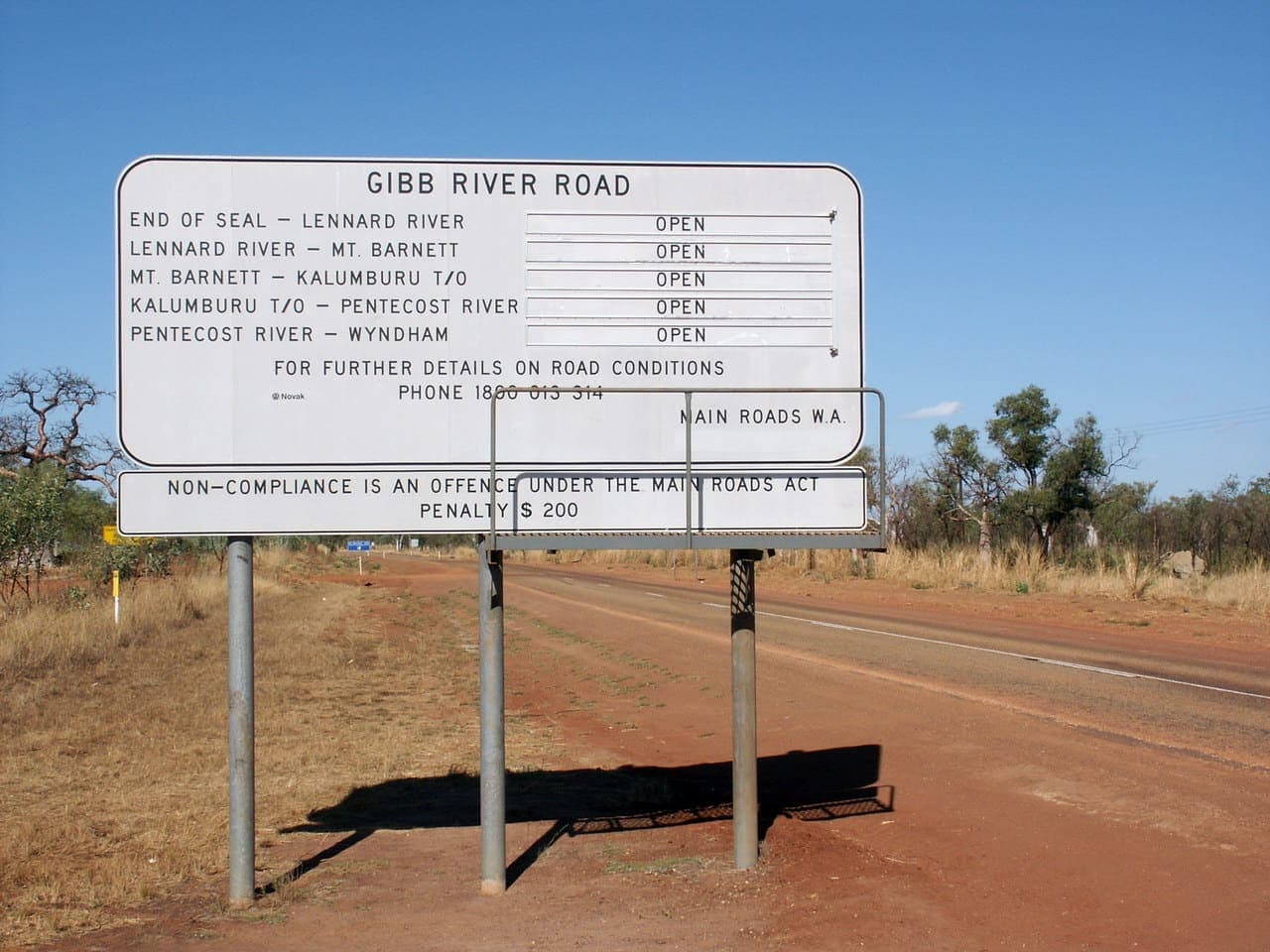
Gibb River Road, Western Australia by Nachoman-au, CC BY-SA 3.0. Source on Wikimedia Commons. Self-hosted locally. See the full image credits.
At a glance
- Start with a backyard or nearby booked site before a remote night.
- A family tent is a sleep-and-weather decision, not a brand contest.
- Free camping is permission-based, not a national right.
- Gear lists should shrink to what you will actually carry.
Family camping Australia is ordinary and excellent: a Friday night near a creek, a booked national park pad, a long weekend that teaches someone how to cook in a pan. It does not require a lap of the continent. It does require a plan for sleep, weather and toilets.
Choosing a family tent
Read the dedicated family tent guide. The short version is this. Count real sleepers, not marketing “berths” that assume two toddlers in a porch. Decide whether you need standing room for rainy-day dressing. Practise the pitch at home. If the bag does not fit in the car with the esky and the dog crate, it is the wrong tent for this trip.
This hub will not crown a model and it will not send you to a single retailer. Hardware aisles and outdoor shops both sell canvas and polyester. The criteria travel better than the catalogue.
Free camping vs paid campgrounds
Paid campgrounds — council, park, farm, caravan park — buy predictability. You know there is a booking, a pad, often water and a bin. Free camping can be quiet and legal on designated reserves and some rest areas. It can also be a myth people tell themselves on a closed gate. Ghost camping that holds or occupies a site against the rules is how families get moved on and how places lose goodwill.
If you are looking at New South Wales national parks, use the official parks booking channels rather than a remembered “free” tip from a comment thread. Other states have their own systems. This page will not invent login steps that change.
Camping gear checklist
The camping gear checklist is organised as shelter, sleep, kitchen, light, first aid, kids, and leave-no-trace. It is not a dare to buy everything at once. Borrow. Trial. Subtract.
Family camping basics expands these three decisions into a full guide: first nights, food that does not depend on a gadget, and how to camp with kids who still go to bed at seven.
Camping near cities and coasts
Plenty of families start near where they already live — a south-coast weekend, a mountain night, a site within a school-night drive. Those trips are not lesser than a Kimberley crossing. They are how kids learn the rhythm. Search official park pages for the region you can actually reach this month. This journal will not fake a “near me” directory.
When you want place rather than method, jump to the Big Lap, Kimberley or kids outdoors hubs. Method first, map second, agencies always.
First nights that actually happen
The backyard night is not a joke chapter. It is how you learn that the inner attaches to the fly, that a child wants a cup at 1am, and that the torch is still in the kitchen. The second night can be a booked site within a short drive — a south-coast campground, a mountain park, a council reserve — wherever your official parks page has a vacancy.
School-night camping is allowed to be ordinary. Friday after work, Saturday walk, Sunday home. That rhythm teaches more than a once-a-year blowout.
Weather, fire and neighbours
Check fire bans. Check wind if you have a tall cabin tent. Check whether generators are allowed before you become the neighbour people remember. Paid campgrounds have etiquette; free sites have it too, just without a host to glare.
If rain wins, eating in the car is still camping. If heat wins, a designated swim and a siesta is still camping. Toughness is overrated. Continuity is not.
How this hub feeds the rest of the site
Method here, place elsewhere. When the tent pitches itself in your hands, open Big Lap or Kimberley or kids outdoors. If you want the long versions now, they are family camping basics, choosing a family tent, free camping and the gear checklist. Four doors, one hallway.
Regional starting points, without a fake directory
A family in a capital city usually starts with the parks they can reach after work or on a term break. That might be a coastal reserve, an inland river, or a mountain campground with a booking. The official parks page for your state is the directory. This journal will not impersonate “near me” results or invent vacancies.
If you later take the same kit on a Big Lap, you will already know who sleeps where and who hates the inflatable pillow. That knowledge is worth more than a new stove. If you never take it further than a Friday night, it is still a complete outdoor life.
Keep contact handy for guest-post pitches about family camping method — places and honest technique, not rankings. Keep the HTML sitemap handy if you want every guide in one list.
Guides in this section
Family camping basics
How Australian families start camping with kids — first nights, tents, food, and the difference between free camping and a booked pad.
Choosing a family tent
How to choose a family tent in Australia — sleep count, weather, packed size and practice — without a product ranking.
Free camping Australia
When free camping is legal in Australia, how it differs from paid campgrounds, and what people mean by ghost camping.
Camping gear checklist
A family camping gear checklist for Australia — shelter, sleep, kitchen, light, first aid and kids — written as thinking lines, not a shopping race.
Or return to the full adventure journal and open Family camping basics.
Questions families ask
- What is the average cost of a campsite in Australia?
- There is no useful single average. Council sites, national park bookings and private campgrounds all price differently, and those prices belong to the operator or agency on the day you book.
- Can I free camp in Australia?
- Yes, in places where the land manager allows camping without a fee — and no, not wherever you like. Always read the sign and the current park or council page.
- What is ghost camping in Australia?
- People use it for leaving gear to hold a site, or for camping without paying or booking where rules require it. Treat unauthorised occupation as a problem, not a hack.
- What is the best family tent in Australia?
- The tent that sleeps your household, stands in the weather you expect, and still fits in the vehicle after a supermarket shop.
Pitch a family travel note
This journal welcomes considered guest posts on family camping and Australian road travel. Editorial citations stay followed; paid placements are marked sponsored.
Contact the desk about a guest post · Browse the adventure journal