Camping gear checklist
A family camping gear checklist for Australia — shelter, sleep, kitchen, light, first aid and kids — written as thinking lines, not a shopping race.
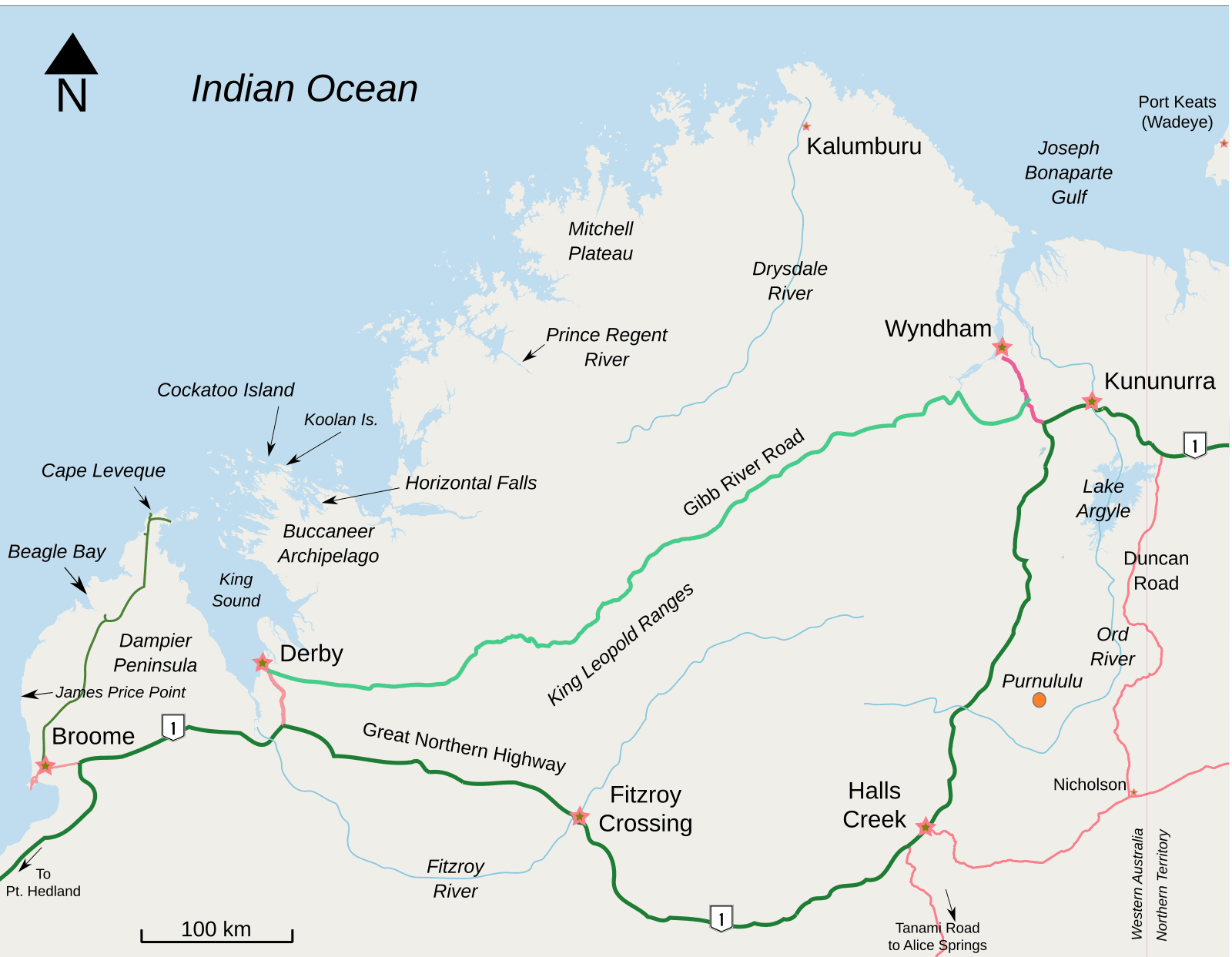
Blank map of the Kimberley region of Western Australia by Djanga, CC BY-SA 3.0. Source on Wikimedia Commons. Self-hosted locally. See the full image credits.
A camping gear checklist should make the next trip quieter, not denser. Families get talked into catalogues: cheap camping gear Australia, online camping stores, a particular hardware aisle, a fridge that costs more than the holiday. This list is organised as jobs. If a job is already done by something you own, do not buy a camping-coloured duplicate.
Use it with family camping basics and choosing a family tent. If you are heading remote — Gibb River Road, Palm Valley — add water, communications and recovery, then stop.
Shelter
Tent or swags, fly, poles, pegs that match the ground, spare pegs, mallet, guy lines, footprint or tarp, repair tape. Practise the pitch. A shelter you cannot raise in wind is decoration.
If you use a roof tent, the checklist still includes a way to get children down in the night and a ladder habit that does not become a toy.
Sleep
Mats or stretchers, bags or quilts rated for the coldest night you will actually meet, pillows that do not take the whole boot, a layer for the person who always runs cold. Kids sleep colder when they are tired. Adults sleep worse when they pretend otherwise.
Earplugs and a soft night light prevent more arguments than a deluxe stretcher.
Kitchen
A stove you already understand, fuel, a pot, a pan, a knife, a chopping thing, utensils, plates, cups, a way to boil water, a way to wash, a way to keep food safe enough for the length of the trip. An esky can be enough for a weekend. A powered fridge is a choice, not a virtue.
Food is meals you can cook tired. Water is litres you can defend. Rubbish bags come home.
This desk will not review a fridge brand or a camping chair, even though the archive once ran product notes. Those notes are not this journal.
Light and power
Head torches for each person who can wear one, a shared lantern, spare batteries, a way to charge a phone if you rely on it for maps or weather. Solar is optional. Arguments about cable colour are optional.
Do not use candles as a family lighting plan inside a tent.
First aid and safety
A kit you have opened at home, insect considerations for the region, sun protection, any regular medicines, a whistle, knowledge of the emergency number, and a plan for snakes and heat that is not “we will be fine”. Shoes at night. Hats at noon.
On water, lifejackets are not a vibe. In crocodile country, designated swimming only — see the Top End and Kakadu and Litchfield guides.
Kids
Spare clothes in a bag you can reach without unpacking the universe. A cup they will actually drink from. A book. One toy that does not need a table. A job: pegs, cups, looking for the map. Jobs make camps feel like theirs.
The 51 outdoor things list is the daytime menu. This checklist is how you still have a spoon at dinner.
Leave-no-trace and toilet
Trowel and the knowledge of when you must not dig. Paper that leaves with you if required. A portable toilet if the site and your household need one. Never treat a free camp as a pit you invented.
Fire only where allowed, in the existing place, with water to put it out. Fire bans win.
What you can skip
Branded everything. A second stove. Decorative lighting. A kitchen station that takes longer to assemble than dinner. Most “family camping setup” photos are a studio, not a Friday.
Borrow before you buy. Hire a tent for the first booked night if you are unsure. Hardware aisles are fine for pegs and tape; they are a poor personality.
Big Lap extras, still not a catalogue
If you are circling, add tool basics, spare parts that match your vehicle, laundry soap, more first aid, and the humility to replace things in a town rather than carry a shop. See planning a Big Lap. Still do not buy a device because a video used it at sunset.
Why you can trust this checklist
Because it is jobs, not SKUs. Because it will not send you to a single store. Because it assumes you already own a pot.
Pack the jobs. Leave the aisle. The kids will remember the night sky, which does not require a receipt.
A packed-car rehearsal
Put everything in the car on a Tuesday. Close the boot. See what you left on the driveway. That object is either essential — and needs a home — or it is a candidate for staying behind. Do this before a Big Lap and before a Friday night. The rehearsal is cheaper than a roof-bag impulse.
Label the kitchen box. Label the first-aid. The person who did not pack should still be able to find a plaster.
Weather layers on the list
Add warm layers even in places you think of as hot, because nights drop. Add sun layers even in places you think of as cool, because kids burn at lookouts. Add rain layers that are not “we will sit in the tent forever”.
Seasonal extras — insect considerations, alpine extra insulation, tropical moisture bags — attach to the trip, not to your identity as a camper.
What the archive used to do, and what we do
The old site ran road-test notes on chairs and fishing tackle. This checklist will not revive them as reviews and it will not pick a winner in a hardware aisle. If a peg bends, buy a better peg. If a stove fails, replace the stove you understand.
A one-page version you can say aloud
We can sleep. We can eat. We can see. We can treat a cut. We can toilet. We can leave no trace. We can get help. If those sentences are true, you are packed enough to go. If one is false, stay home one more night and fix that job. Then read family camping basics and go somewhere close enough that a forgotten teaspoon is funny.
Kitchen detail that prevents the 6pm spiral
A pot you can boil, a pan you can fry, a lid, a stirring spoon, a knife that stays sharp enough to cut an apple, a chopping board that is not the car seat, cups that do not tip on uneven ground, a way to put a hot pot down, and a wash bowl. That is a kitchen. A spice library is optional. A second stove is optional. A table is optional until your knees complain, at which point a cheap table earns its keep.
Keep food that does not need a recipe. Keep a backup meal that needs only boiled water. Keep snacks that are not a sugar-only policy. Kids crash; food is mood.
Wash with as little water as you can while still being honest about hygiene. Strain scraps into a bag. Do not leave a trail of pasta water on a free camp.
Sleep detail that prevents the 2am spiral
Mats fail at the valve. Bags fail at the zip. People fail at the “I will be fine on this jumper”. Carry a repair thought and a spare layer. Put the child’s bag on the mat before dusk so you are not building a nest in the dark. Keep a dry set of socks in the cabin of the car for the morning.
If you use stretchers, practise the legs. If you use a roof tent, practise the ladder with a sleepy child on a driveway, not on a windy pad.
The trip-specific add-ons
Beach: more water, shade, a way to rinse sand off a child who will not stand still. Alpine: insulation, a plan for a short day. Inland: dust bags, more water again. Boat day: jackets first, rods second — see fishing through the generations. Remote: communications and recovery, which are vehicle kit, not camping-coloured ornaments.
Write the add-ons on a sticky note. Do not engrave them into a personality.
After you unpack
Dry the tent. Charge the lights. Restock plasters. Put the mallet back in the tent bag. The next trip starts in the hallway, which is why this checklist is jobs, not a shop. If you only remember one line, remember the jobs you can say aloud: sleep, eat, see, treat a cut, toilet, leave no trace, get help. Say them in the hallway before you leave. If one job is missing, fix that job and then go. The outdoors will wait for a plaster and a bottle of water. They will not wait kindly for a forgotten torch or an unspoken toilet plan.
Filed under camping, family. Return to the Family camping hub.
Questions families ask
- What are family camping essentials?
- Shelter you can pitch, sleep systems for the coldest expected night, a way to cook and clean, light, water, first aid, and a toilet plan — everything else is optional until those work.
- Do I need to buy camping gear at a hardware store?
- No. Borrow, hire or buy only what the next trip requires. Aisle theatre is not a packing method.
- What camping gear do I need for a Big Lap?
- The same essentials, plus redundancy for repairs, dust and laundry — still not a reason to own every gadget in a catalogue.
Pitch a family travel note
This journal welcomes considered guest posts on family camping and Australian road travel. Editorial citations stay followed; paid placements are marked sponsored.
Contact the desk about a guest post · Browse the adventure journal