Free camping Australia
When free camping is legal in Australia, how it differs from paid campgrounds, and what people mean by ghost camping.
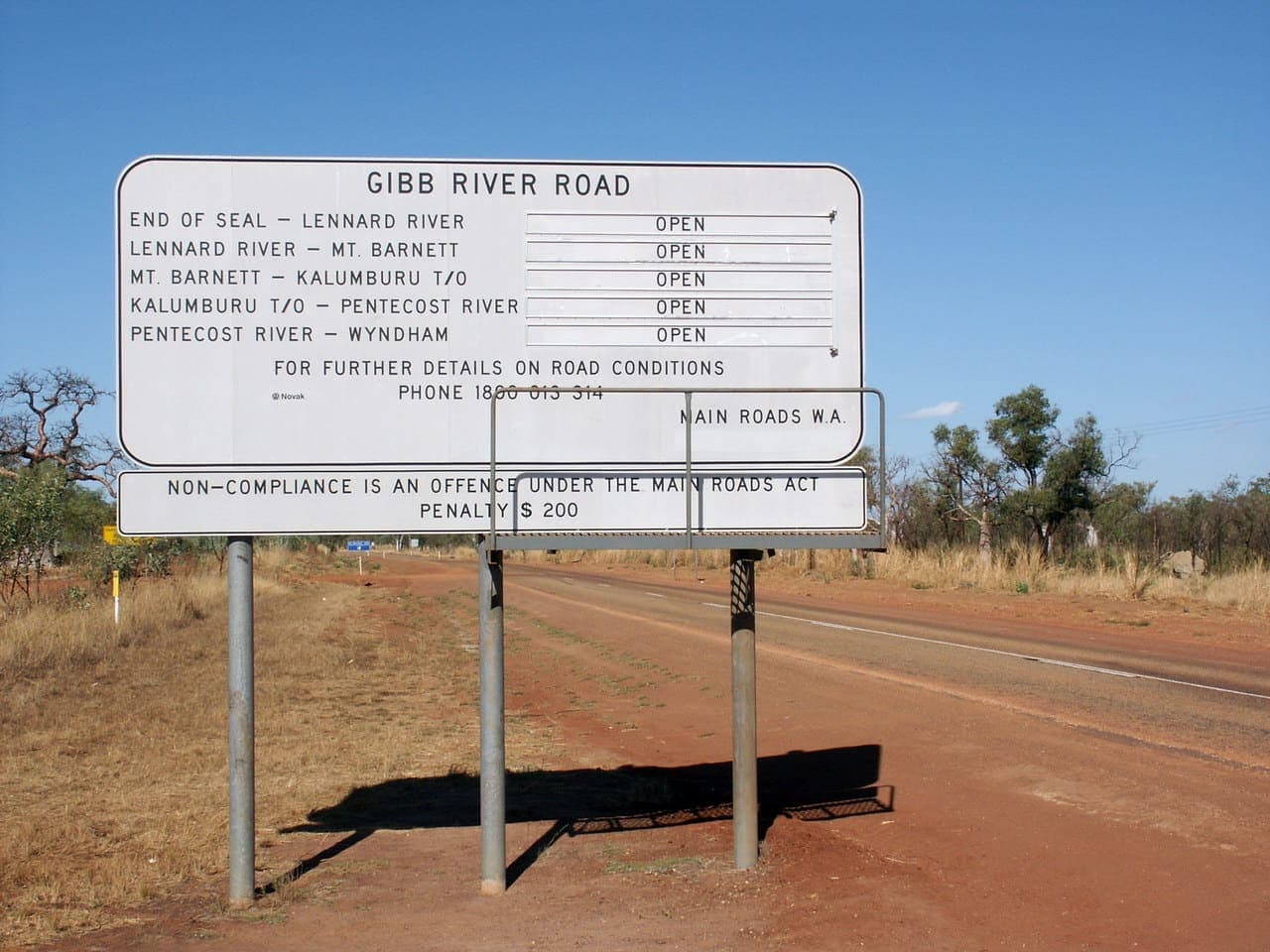
Gibb River Road, Western Australia by Nachoman-au, CC BY-SA 3.0. Source on Wikimedia Commons. Self-hosted locally. See the full image credits.
Free camping Australia is a real practice and a magnet for bad advice. The real version is a night on land where the manager has said camping is allowed without a fee: a designated reserve, a signed rest area, a property that invites travellers, a seasonal arrangement published by a council. The bad-advice version is “we pulled over because it looked quiet”. Families should use the first version.
This guide sits beside family camping basics and the camping gear checklist. It will not publish a secret map. Secret maps go stale and they get places closed.
Permission is the whole subject
Australia is not a commons you can tent by default. Land is managed by parks, councils, pastoralists, traditional owners, transport agencies and private hosts. Each can allow, restrict or forbid camping. A missing “no camping” sign is not permission. A social-media pin is not permission.
National park campgrounds are usually booked and paid, even when the vibe is rustic. If you are looking at New South Wales or any other state estate, use that state’s official parks channel. This journal will not invent a “NSW national parks camping login” tutorial; those interfaces change. It will say: if the park sells a booking, you are not free camping there.
Free camping versus paid campgrounds
Paid sites buy predictability: a pad, a neighbour who also booked, often water and a bin, sometimes a host. They cost whatever the operator or agency charges that season. There is no useful national average. Anyone quoting one is blending unlike things.
Free sites buy silence or convenience and spend your preparation instead of your card. You need more water, more toilet plan, more humility about fire rules, and a backup paid site if the free one is full or closed.
A Big Lap built only on unpaid nights is a brittle budget and a poor lesson. Mix the two. Celebrate a legal free night. Do not resent a booked shower.
What people mean by ghost camping
Ghost camping is informal language, not a legal category. People use it in at least two ways.
The first is leaving a tent, a chair or a vehicle to hold a site while you are elsewhere — at the gorge, at the shop, at another campground that might be nicer. In a first-come area this can be ordinary courtesy or it can be a land grab that blocks a family who arrived when the sign said they could. Follow the local rule. If the manager says you cannot reserve with empty gear, do not.
The second is occupying a place that requires a booking or a fee without doing either, or camping on land that does not allow it. That is not a life hack. It is how rangers and landholders lose patience, and how access disappears for the next household.
Teach kids the first-come ethic and the booking ethic as different games with different rules. Switching games mid-pitch is how arguments start.
Rest areas, showgrounds, farms
Highway rest areas sometimes allow overnight stopping and sometimes forbid camping tents. The distinction matters. A truck stop is not automatically a playground. Keep children off the through lane. Leave at a decent hour.
Showgrounds and recreation reserves sometimes open for travellers during events or dry months. The council page is the source, not a memory from 2018.
Farm and station stays can be paid, donation, or complimentary with a purchase. That is still permission-based camping. It is not “free bush”. Be a guest.
Family practicalities
Free sites can be wonderful with kids: fewer generators, more stars, a creek if swimming is allowed. They can also be a long way from a toilet at midnight. Bring the toilet plan you will actually use. Pack more water than the optimistic version of you prefers.
Wildlife and livestock are neighbours. Dogs are often unwelcome. Fires may be banned. Rubbish comes home with you. The kids outdoors manners apply harder when there is no ranger talk at 5pm.
If you are combining free nights with Red Centre or Kimberley travel, remoteness multiplies every gap in the plan. Free is not the same as close to help.
How to look without getting scammed by a list
Search the land manager, not “free camping near me” as if the internet were the manager. Official park, council and road-agency pages beat apps that monetise pins. Apps can be useful as a hint and harmful as an authority.
If a pin has no manager, you do not have a site. If a comment thread says “we’ve always camped here”, ask who “we” are and whether the rule changed.
Why you can trust this guide
Because it will not hand you a poached coordinate. Because it treats ghost camping as a social and sometimes legal problem. Because it refuses a fake average campsite cost.
Use free camping as a spice. Use booked camping as the meal you can serve a tired child. That mix is how families stay welcome on the road.
How families get this wrong
They arrive at dusk at a pin with no manager. They empty a toilet into a place that forbids it. They run a generator beside someone who came for quiet. They stay an extra night on a 24-hour rest area. They treat a showground like a private backyard.
All of those are avoidable. Read the sign in daylight. Have a paid backup. Teach kids that “free” means “we are guests of a rule”, not “we won”.
Water, toilets and fire — again
Free sites often mean you brought the infrastructure. Water in, water out, waste out. Fire only in the existing place if fires are allowed at all. A ban is a ban even if the air is cool and the photos would have been nice.
If you cannot describe the toilet plan out loud, you are not ready for that site. Book a pad. There is no shame in a tap.
Apps, books and rumours
Apps are hint machines. Books go out of date. Rumours skip the closure. Use them to find a name, then find the manager. If you cannot find the manager, keep driving.
This journal will not list coordinates. It will keep telling you to look for a sign and a current page. That sentence is the whole SEO-unfriendly truth of free camping.
After a good free night
Leave the site cleaner. Send a correction to a manager if a sign is down. Do not post a pin that turns a quiet legal site into a party. The next family — maybe yours — would like the place to remain allowed.
Then spend a booked night so the budget and the children remember that camping has more than one gear. The family camping hub is the map back to method.
Why this page stays stubborn
Free camping content on the internet drifts toward coordinates and hacks. This page will keep drifting toward managers, signs and backups. That is not a lack of generosity. It is how access survives. If you want a longer method piece, use family camping basics. If you want a place piece, pick a hub. If you want a legal free night, earn it with a current rule and a tidy exit. That is the whole craft, and it is enough. Keep the backup booking. Keep the tidy exit. Keep the kids in the story as guests, not as owners of the reserve. Guests tidy up. Guests leave when the sign says to leave.
Families, dogs and other people’s rules
Dogs are banned in many parks and unwelcome on many reserves. “Free” does not change that. If your household includes a dog, your legal site list shrinks and your planning time grows. That is the deal.
The same is true of large groups, drones, and firewood collection. If the sign is silent, assume no.
What “ghost camping” looks like at 4pm
A ring of empty chairs on the best creek pads while the occupants are in town. A tent left for two nights on a first-come site. A van occupying a booked pad without a booking. Kids should be able to see why the late-arriving family is angry. If you need to hold a site, use the system the manager built — a booking, a time limit, a conversation — not a chair.
A working sequence
- Decide whether you need a toilet and water tonight.
- If yes, book or pay.
- If no, find a manager and a sign.
- Arrive in light.
- Leave the place able to host the next household.
That sequence is the whole craft. The rest is scenery. Scenery is why you came; craft is why you get invited back. For method around the tent itself, return to family camping basics.
Filed under camping, family. Return to the Family camping hub.
Questions families ask
- Can I free camp in Australia?
- Yes, where the land manager allows camping without a fee — and no, not on any quiet verge that looks unused.
- What is ghost camping in Australia?
- Informal language for leaving gear to hold a site, or for camping without the booking or payment the place requires. Treat unauthorised occupation as a problem, not a hack.
- Is free family camping Australia a realistic plan?
- As an occasional legal night, yes. As the entire budget for a Big Lap or a school-holiday month, no.
- What is the average cost of a campsite in Australia?
- There is no honest average to quote. Fees sit with the council, park or private operator you book — check that page.
Pitch a family travel note
This journal welcomes considered guest posts on family camping and Australian road travel. Editorial citations stay followed; paid placements are marked sponsored.
Contact the desk about a guest post · Browse the adventure journal