Gibb River Road with kids
A family-facing Kimberley hub covering Gibb River Road difficulty, timing, gorges and stations — with live conditions sent to Main Roads WA and parks.
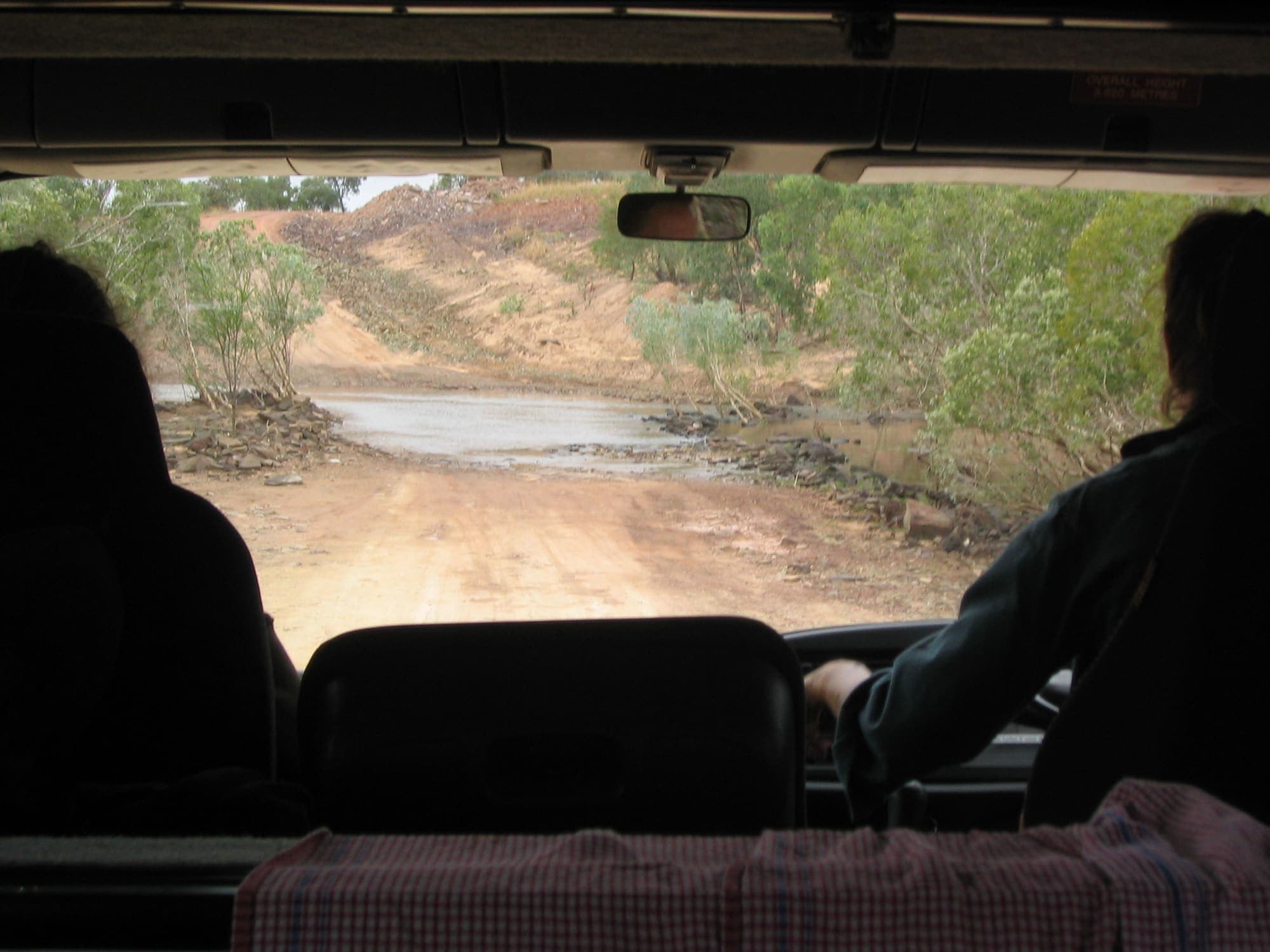
Gibb River Road, The Kimberley by Phil Whitehouse, CC BY 2.0. Source on Wikimedia Commons. Self-hosted locally. See the full image credits.
At a glance
- The Gibb is a remote unsealed Kimberley road, not a suburban shortcut.
- Difficulty is seasonal, vehicle-specific and condition-specific.
- Check Main Roads WA before you leave Broome or Kununurra.
- This hub does not invent station fees, permit costs or day counts as rules.
The Kimberley is the large northern shoulder of Western Australia — ranges, cattle country, gorges and a coast that does not behave like the east. The labelled Kimberley map on this site is a licensed orientation drawing, not a navigation product. Use a current map and the agencies below when you travel.
The Gibb River Road was laid out as a stock route. Visitors now use it as a dry-season traverse between the western and eastern Kimberley. Families come for swimming holes and station country. They should also come with humility. This is remote travel. Phone coverage fails. Heat is real. Creek crossings change after a storm.
How many days do you need?
Count driving days and walking days separately. A vehicle that only “does the Gibb” without stopping will have a short number. A family that wants Manning Gorge, a station night and a rest day will need more. The Gibb River Road with kids guide talks through that pacing. It does not invent a mandatory itinerary or a fee table.
How difficult is the Gibb River Road?
Difficulty is a conditions question. Corrugations, bull dust, stone, traffic and the last rain all matter. A high-clearance four-wheel drive with good tyres is the usual baseline. Towing adds another layer. If you have never aired down, recovered a vehicle or judged a crossing, practise somewhere closer to help first. Read Main Roads Western Australia on the morning you depart. If the report is closed or cautionary, believe it.
Gorges and stations along the way
The old journal wrote about Mornington, El Questro, Mount Barnett, Munja Track country and the Kalumburu road. Those place-names still describe the Kimberley pattern: a gorge walk, a station camp, a side track that is harder than the Gibb itself. This rebuild will not reprint those diaries or impersonate the people who wrote them. It will tell you to confirm access with Explore Parks WA and with the station or park that manages the site.
Cape Leveque and the Dampier Peninsula are a different Kimberley road system again. Treat each track as its own decision.
Kimberley camping, Broome and supplies
Broome and Kununurra are the usual bookends for a Gibb crossing. That is where most families do a last grocery, a last tyre check and a last read of the road report. This hub will not review a named “outback supplies” shop or invent stock lists. Pack from the camping gear checklist, then buy what you are actually short of.
If you are combining the Kimberley with a larger loop, read the Big Lap hub and the Top End notes so the wet season does not trap you on the wrong side of a river. Then open the long Gibb guide and make a family plan that can survive a rest day.
What kids need on a Kimberley day
Kids need water in the car and water on the walk, a hat that stays on, and a rule about not disappearing toward a pretty creek. They need a rest day that does not look like failure. They need you to say “we are turning around” without performing toughness.
A gorge walk in heat is enough adventure. Adding a second gorge because the itinerary looked empty on paper is how families fray. The kids outdoors hub has the manners; this hub has the place.
Broome, Kununurra and the sealed alternatives
Not every Kimberley family story has to be the Gibb. Sealed roads reach plenty of coast and town country. If your vehicle or your nerves are not ready, that is a complete holiday, not a lesser one. Broome and Kununurra remain useful towns either way: food, a tyre shop, a night with a shower.
If someone is selling you a tour as the only safe way, treat that as marketing. If someone is selling you a solo crossing as the only authentic way, treat that the same. Safety is not a brand.
Read this before you add the Gibb to a lap
A Big Lap does not require the Gibb. Adding it changes direction and timing. If the wet is coming, you cannot negotiate with the river. If a park page says a side gorge is shut, you cannot open it with optimism.
Take the long Gibb guide slowly. Then look at the licensed road photographs on this site as pictures of a type of country, not as proof the track is kind today.
The map on this page is not the road
The licensed Kimberley map is an orientation drawing. It will not tell you whether a crossing is down. The licensed road photographs show a type of red corridor. They will not tell you about this week’s corrugations. Use Main Roads WA and Explore Parks WA, then the Gibb with kids guide, then your own eyes.
That order is how families stay welcome in cattle country and park country alike.
Guides in this section
Gibb River Road with kids
A family guide to Gibb River Road difficulty, timing, vehicles and gorge days — with live conditions from Main Roads WA and parks.
Or return to the full adventure journal and open Gibb River Road with kids.
Questions families ask
- How many days do you need to do the Gibb River Road?
- Enough days to drive the corridor and still walk the gorges you came for. Many families think in the better part of a week or more once side trips are included — confirm current access before you lock dates.
- How difficult is the Gibb River Road?
- In a dry, well-graded season it can be a corrugated but straightforward high-clearance drive; after rain or after heavy traffic it can be slow, sharp and technical. Difficulty is not a fixed rating.
- What's the best time to do the Gibb River Road?
- The conventional window is the Kimberley dry season, when rivers drop and road reports are more often open. Exact opening and closing belong to Main Roads WA and the parks, not to a remembered month.
- What is the best vehicle to use on the Gibb River Road?
- A capable high-clearance four-wheel drive with appropriate tyres and recovery gear is the usual requirement. This journal will not crown a single make.
Pitch a family travel note
This journal welcomes considered guest posts on family camping and Australian road travel. Editorial citations stay followed; paid placements are marked sponsored.
Contact the desk about a guest post · Browse the adventure journal