Kakadu and Litchfield
A family hub for the Top End — Kakadu, Litchfield, seasonal access, and why Parks Australia and NT Parks are the live sources.
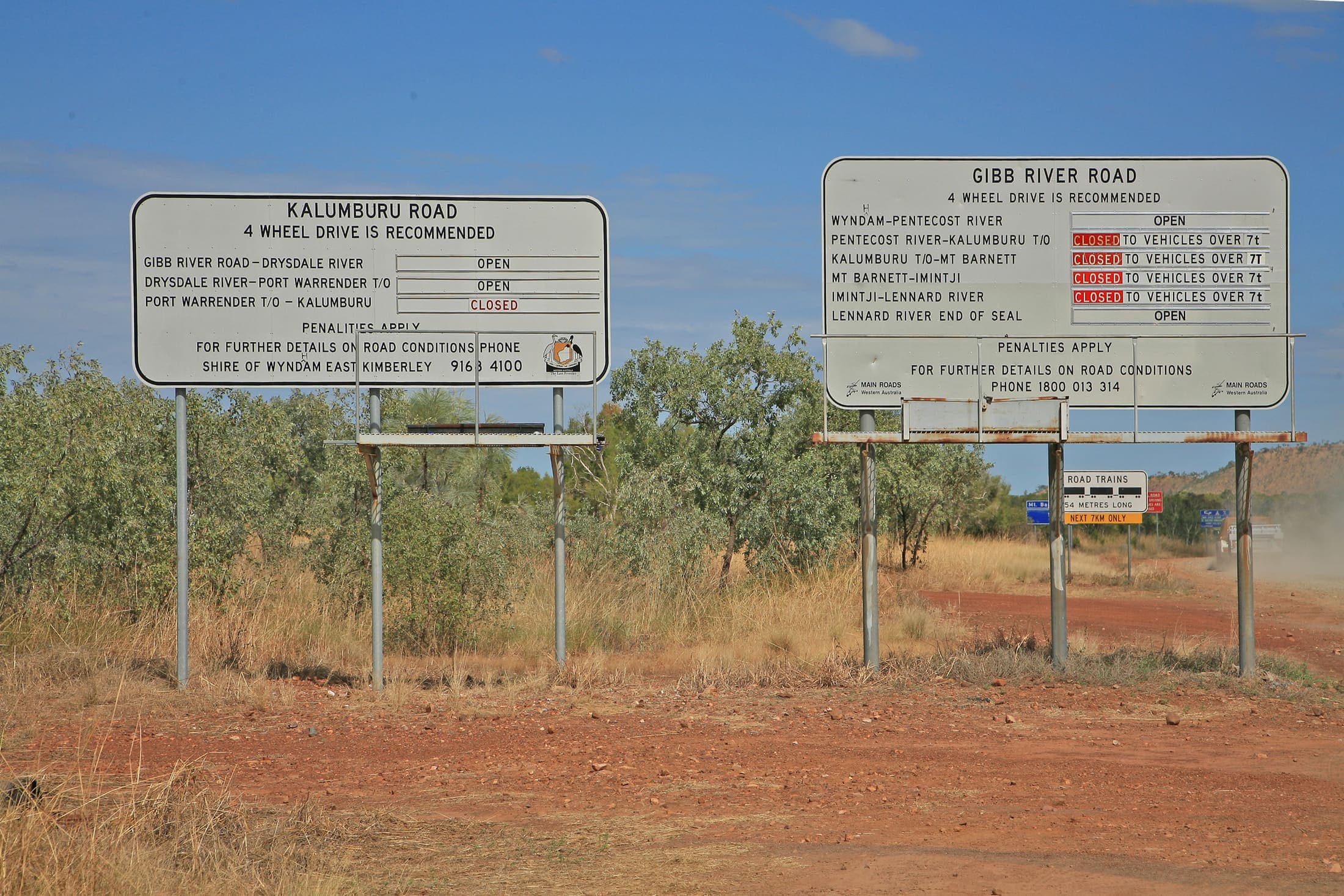
Gibb River Road, Western Australia by W. Bulach, CC BY-SA 4.0. Source on Wikimedia Commons. Self-hosted locally. See the full image credits.
At a glance
- Kakadu and Litchfield are a classic Darwin-area pairing, not the same park.
- Seasonal flooding and site closures are normal, not a surprise.
- Crocodile habitat is real water — read the park warnings.
- Passes and site rules live on the park websites.
The Top End is the northern Northern Territory — monsoonal, green in the wet, smoky and accessible in the dry, and full of water that demands respect. Families who enjoy it usually pair a shorter park with a larger one and leave days for heat and travel.
Kakadu and Litchfield
Kakadu National Park is jointly managed and large enough that you should not treat it as a single lookout. Wetlands, escarpment country and cultural sites each have their own access rules. Litchfield is smaller, closer to Darwin and famous for waterfalls and spring-fed pools when they are open. Together they make a readable Kakadu and Litchfield itinerary if you stop asking them to be the same trip.
This hub will not invent a day-by-day hour count or a pass price. Parks Australia and NT Parks publish those. They also publish site closures after flooding, burns or cultural business. Believe the current page.
Seasonal sense
The Top End wet season can close roads and change which falls are safe or reachable. The dry season is the conventional family window, but “dry” is not a synonym for empty or easy. Heat remains. Fires may be used for land management. Check the park pages in the week you travel, not the month you daydreamed.
If this Top End stay is a chapter in a Big Lap, look at where you will be when the Kimberley and the Gulf get rain. The Gibb River Road hub and this page should be read as a pair.
Family practicalities
Shade, water and crocodile briefings are not optional extras. Teach kids that a pretty creek is not a default swimming hole. Use marked areas only. The kids outdoors hub has more on wildlife manners; this page is about place.
Darwin is the logistics city: groceries, a rest night, a museum morning if the heat wins. This journal will not rank caravan parks or name a “best” suburb. It will say that a rest day in town is a valid itinerary item.
From here, read the long Kakadu and Litchfield guide. If you are heading south, the Red Centre hub is the next landscape change. If you are heading west, check Main Roads and WA parks before you call the Kimberley open.
Crocodiles are a planning fact
Saltwater crocodiles inhabit much of the Top End’s tidal and connected water. Freshwater areas can still be unsafe. The only swimming rule that belongs on a family fridge is: swim where the managing park currently says you may. If there is no sign and no current notice, stay dry. Teach that before you teach a waterfall name.
This is also why a “secret pool” tip from a stranger is worthless. The stranger does not manage the park and does not sit with your child.
Culture, fire and smoke
Kakadu’s jointly managed sites include places that close for cultural business. Fire is used in land management. Smoke can sit on a valley and change a walk. None of that is a failed holiday. It is the place working. Check Parks Australia and NT Parks in the week you travel.
A modest pairing, then a rest
Give Litchfield the shorter stay if that matches your energy. Give Kakadu more room. Put Darwin in the middle or at the end. Then decide whether the Kimberley or the Red Centre is actually next, or whether you have already had enough of packing the tent. Enough is a valid Top End itinerary.
The long Kakadu and Litchfield guide carries the detail. This hub is the decision to treat them as a pair rather than a blur. Pack more water than the photogenic plan, believe a closed-site notice, and let a Darwin rest night count as part of the itinerary rather than as time you failed to spend in a gorge. If you have energy left, read the kids outdoors wildlife notes before you promise a child a swim. If you do not, that is also a complete Top End day. Either way, check the park page again the morning you drive.
What to read next
The Kakadu and Litchfield itinerary is the long form of this hub. The kids outdoors pages cover wildlife manners. The Big Lap pages cover how a northern chapter sits in a year. If you only read one official site this week, make it the park you will actually stand in. Then pack water and a hat and leave room for a Darwin rest night.
Guides in this section
Kakadu and Litchfield itinerary
How families pair Kakadu and Litchfield from Darwin — seasonal access, designated swimming only, and crocodile warnings from Parks Australia and NT Parks.
Or return to the full adventure journal and open Kakadu and Litchfield itinerary.
Questions families ask
- How do Kakadu and Litchfield fit in one itinerary?
- Many families use Darwin as a base or a bookend, giving Litchfield a shorter waterfall-focused stay and Kakadu a longer wetland and rock-country stay, with dates checked against seasonal access.
- Can I swim in the Top End?
- Only where the managing park currently says the water is a designated swimming area. Assume other waterways are crocodile habitat unless a current park notice says otherwise.
Pitch a family travel note
This journal welcomes considered guest posts on family camping and Australian road travel. Editorial citations stay followed; paid placements are marked sponsored.
Contact the desk about a guest post · Browse the adventure journal