Kakadu and Litchfield itinerary
How families pair Kakadu and Litchfield from Darwin — seasonal access, designated swimming only, and crocodile warnings from Parks Australia and NT Parks.
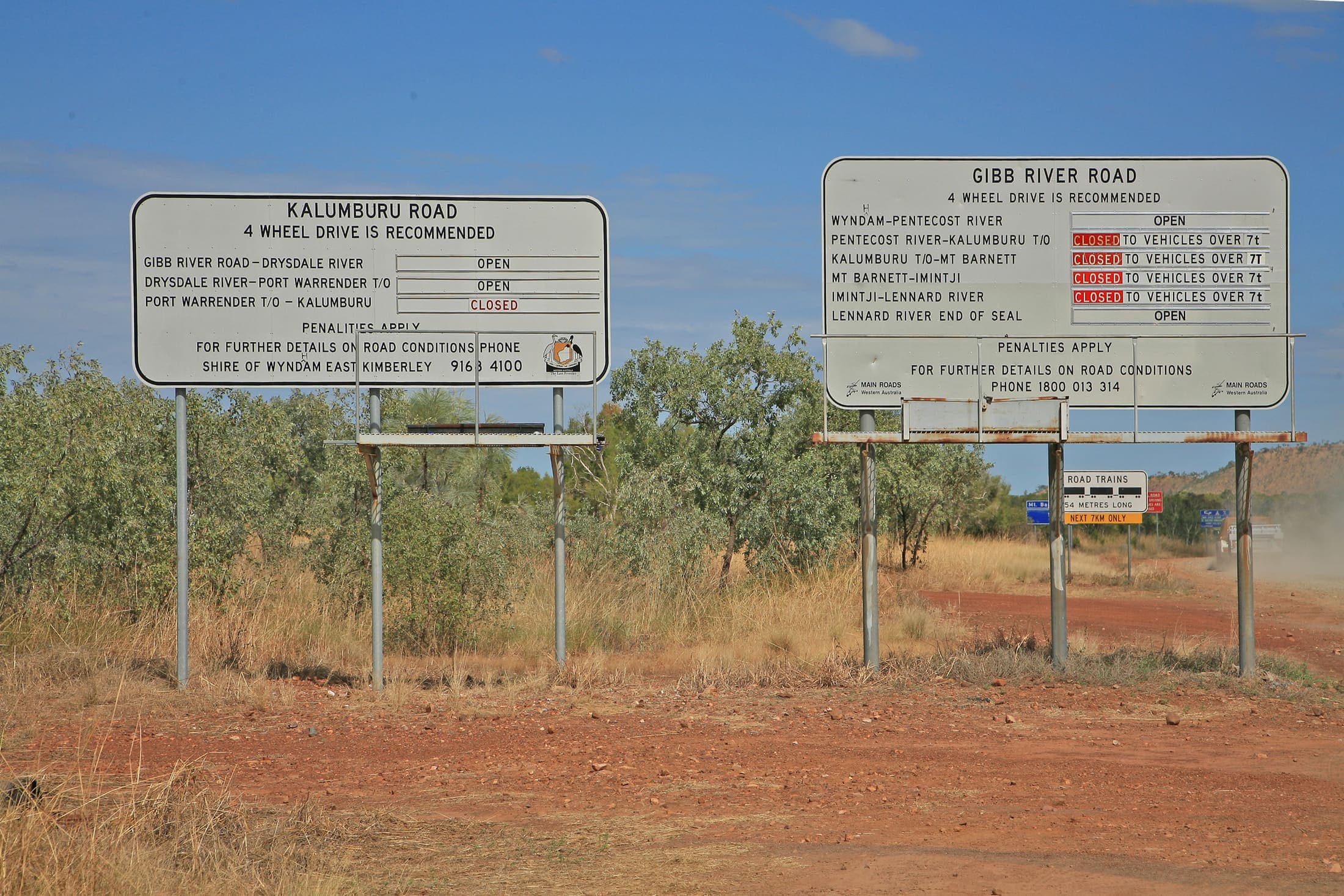
Gibb River Road, Western Australia by W. Bulach, CC BY-SA 4.0. Source on Wikimedia Commons. Self-hosted locally. See the full image credits.
Kakadu and Litchfield sit in the same northern conversation and on many of the same family calendars. They are not the same park, they are not run by the same agency, and they do not ask the same amount of time. A useful itinerary treats them as a pairing: a shorter waterfall park close to Darwin, and a much larger jointly managed landscape of wetlands, escarpment and cultural sites. The pairing works when you stop asking one park to do the job of the other.
This guide is for households travelling with children. That changes the shape of the week. Kids need shade, leftover food, and a clear rule about water. Adults need a way to change the plan when a road closes or a pool is shut. If you came here for a downloaded day-by-day that pretends the wet season is a rumour, you are in the wrong journal. If you came here to pair two Darwin-area parks without inventing swimming holes, stay.
The live sources for this pairing are Parks Australia’s Kakadu pages and NT Parks for Litchfield and the rest of the Territory estate. Passes, site closures, fire and flood notices belong there. This journal will not invent a park-pass price, a campsite tariff, a kilometre count, or a “best operator”. General information is not advice. You remain responsible for the vehicle, the children, the weather and the water.
Why pair Kakadu and Litchfield at all?
Because they sit on either side of a Darwin restock and they teach different lessons. Litchfield is the park many Darwin families already know: waterfalls, magnetic termite mounds, weathered sandstone, and designated swimming when NT Parks says those sites are open. Kakadu is large enough that “we did Kakadu” is a sentence that needs a follow-up. Wetlands, rock country and cultural sites each have their own access rules. Together they give a Top End chapter that feels complete without pretending you have seen every billabong.
Darwin as a logistics bookend
The pairing also suits a Big Lap household that is already thinking in chapters rather than trophies. Darwin is the logistics city: groceries, a mechanic, a museum morning if the heat wins, a cabin night if someone is sick of the tent. This journal will not rank caravan parks or name a “best” suburb. It will say that a rest day in town is a valid itinerary item, not a failure of nerve.
If you are heading south afterward, the landscape change is the Red Centre road trip. If you are still deciding how long you can be away, read planning a Big Lap of Australia before you lock northern dates against a school term that cannot move.
They are not the same park
Kakadu is a Parks Australia park, jointly managed, with its own pass and its own news-and-alerts feed. Litchfield is an NT Parks park. Visitors to the Territory need to understand the NT Parks visitor pass system for most Territory parks and reserves; Kakadu’s pass is a separate Parks Australia product. Buy what the managing agency asks for. Do not assume one ticket covers both, and do not reuse a price you remember from a video.
Kakadu asks you to think in regions: floodplain and billabong country, escarpment and waterfall country, and places where rock art and living culture are the reason you slow down. Parks Australia publishes current site information and urges visitors to pre-purchase a park pass. It also publishes safety pages that are more important than any photo list. Read those in the week you travel.
Litchfield asks you to think in sites: falls, creeks, lookouts, a handful of campgrounds, and some four-wheel-drive side tracks. NT Parks lists visitor areas and is explicit about which of them include swimming and which do not. Tolmer Falls, for example, is presented as a lookout and walk, not a swim. Greenant Creek is listed with no swimming. That distinction is the whole job of an honest itinerary. A pretty photograph is not a permission slip.
Aboriginal people have lived in both landscapes for a very long time. Litchfield’s page names Koongurrukun, Mak Mak Marranunggu, Werat and Warray connections. Kakadu’s welcome is a living cultural landscape, not a backdrop. Stay on marked tracks. Follow photography and site rules. Do not treat a rock-art shelter as a climbing frame.
Seasonal access is the itinerary
The Top End has a wet season and a dry season. That is not a slogan. Roads close. Parks change what you can reach. Waterfalls can be spectacular and still be closed. Smoke from land-management burns can sit in a valley on a day you planned a lookout. A pairing itinerary is a seasonal document first and a waterfall list second.
The conventional family window is the northern dry, when more roads are open and more campgrounds are staffed. NT Parks notes campground hosts at some Litchfield sites in the peak months. “Dry” is not a synonym for empty, cool or easy. Heat remains. Some waterholes drop. Some tracks stay four-wheel-drive only. Check the park pages in the week you travel, not the month you daydreamed.
The wet season can close roads and change which falls are safe or reachable. Flash flooding and rapid currents are part of Kakadu’s own water-safety advice. If your only available window is a short school-holiday dash through heavy rain, this pairing may be the wrong chapter. That is not a moral judgement. It is a road-report judgement. Believe the current page.
If this Top End stay sits inside a longer lap, look at where you will be when the Kimberley and the Gulf get rain. Main Roads Western Australia is the live source for the western roads you might meet later. Do not lock a Kakadu week against a Gibb week because a blog once said both were “August magic”.
Swim only where the park currently says so
This is the sentence children need before anyone unpacks a towel. A pretty creek is not a default swimming hole. A waterfall is not automatically a pool. A rock hole that was open last year may be closed this week.
In Kakadu, Parks Australia is blunt. Waterways and natural pools can be treacherous. Many are home to crocodiles. Crocodiles hunt while submerged and can attack in knee-deep water, so even wading can be dangerous. Observe warning signs. Keep a safe distance from the water’s edge. Treat rock around falls as slippery. Cold water can shock on a hot day. The park’s own safety page says the safest place to swim in Kakadu is a public or hotel pool, and that you should never swim alone. This journal will not invent a list of “secret swims”. If a site is a designated swimming area on the current Kakadu page, that is the only invitation that matters.
In Litchfield, NT Parks does mark swimming at a number of visitor areas when those areas are open — Florence Falls, Wangi Falls, the Cascades, Walker Creek, and some four-wheel-drive creek sites among them. It also marks sites with no swimming. “Litchfield equals swimming” is a half-truth that gets families arguing with a closed gate. Read the site page. Read the sign. If a ranger or a notice says no, the itinerary changes.
Teach the rule once, then keep teaching it. The kids outdoors hub is about wildlife manners in general. This page is about Top End water. Kids who can recite “we swim only where the park says” will have a better week than kids who were promised a waterfall every afternoon.
Crocodile warnings are not decoration
Saltwater crocodiles inhabit most areas of water in Kakadu, including floodplains, freshwater billabongs, creeks, rivers and coastal country. Parks Australia’s Crocwise advice is the document to read before anyone camps, fishes or launches a boat. If there are no warning signs, it is still best to assume crocodiles are present. That is the park’s line, not this journal’s flourish.
A few habits travel well with children:
- Stay on marked tracks and in designated visitor areas.
- Keep kids and food well back from the water’s edge.
- Do not collect drinking water from waterways.
- Do not clean fish, wash dishes or play at the bank.
- Never dispose of food scraps or fish frames in the water or at a boat ramp.
- Do not feed, approach or try to photograph a crocodile as if it were a zoo animal.
- If you camp near water, follow the park’s current camping set-back advice.
Parks Australia also spends time on myths that get people hurt: that saltwater crocodiles only live in salt water; that a clear sandy bottom means a safe swim; that a fire on the bank is enough; that you will see the animal if you keep a lookout. Those myths are false. Crocodiles can stay hidden. They can use freshwater far inland. They can be present in a small hole. This journal will not retell the myth list as entertainment. It will say: read the Kakadu safety page, then do what it says.
Litchfield swimming areas exist because NT Parks manages them as swimming areas. That management can change after a flood, a crocodile sighting, or a seasonal closure. A designated swim last month is not a lifetime permit. Check again.
If someone in the vehicle wants to fish, the crocodile briefing comes before the first cast. Fishing from a bank or a boat in Kakadu is a Crocwise activity. Small boats carry more risk. Non-powered vessels are prohibited in Kakadu. If that sentence surprises you, you are not ready to launch. Stay on the lookout, or fish only where the current park rules allow and your household can stay out of the water.
Heat, shade and a child’s day
Kakadu’s safety page treats heat as a primary hazard. Temperatures regularly reach the thirties and can exceed forty degrees in the hotter months. Heat exhaustion, dehydration and low sodium are named risks. The practical family translation is simple. Walk early. Sit through the hot afternoon. Carry more water than feels elegant. Wear hats and long loose clothing. Do not turn a lookout into a midday march because the itinerary looked tidy on paper.
Supervise children near rock, water and car parks. You will not have mobile coverage in most of Kakadu. Tell someone where you are going for the day. Stay on marked tracks. Wear sturdy shoes. Follow ranger directions even when they spoil a photograph.
Litchfield is closer to Darwin and can feel more “day-trip shaped”. It is still hot country. A short walk to a plunge pool is still a heat walk. Pack the same water habit. Plan a shaded lunch. If a child is done, you are done. Turning back is a skill, not a wasted booking.
Food that does not depend on a clever gadget helps. So does a rest night in Darwin in the middle of the pairing, or at one end. This is not inefficiency. It is how families stay kind to each other.
A pairing itinerary is a sketch, not a booking sheet
There is no honest single answer to “how many days”. A household that wants waterfalls, a swim where it is allowed, and a night or two in a booked Litchfield campground can treat Litchfield as a shorter stay. A household that wants Kakadu’s wetlands, a rock-art site, a second region of the park, and time to sit still will eat more calendar. Trying to “do both” in a rushed long weekend is how people skip the crocodile briefing and swim in the wrong creek.
Three pairing sketches
Think in sketches:
- A Darwin-based sketch uses the city for beds and does Litchfield as one or more day trips, then gives Kakadu its own overnight stay or stays. It suits households that need laundry, a supermarket and a fallback pool.
- A park-first sketch books legal campgrounds or other permitted stays inside or beside each park, with Darwin as a bookend. It suits households that already camp well in heat.
- A lap-chapter sketch treats the pairing as one northern block inside a longer loop, with empty days on purpose so a closure does not rewrite the year.
None of those sketches is more authentic. The long Kakadu version is not a higher grade of traveller. The Litchfield day-trip version is not a lesser Top End.
What belongs on the sketch is dull and useful: which agency page you will check on the Sunday before you leave Darwin; whether anyone in the vehicle is comfortable on dirt; whether you have a four-wheel drive if you want Reynolds Track or other four-wheel-drive-only Litchfield sites; whether you have a Kakadu pass before you arrive; whether the kids understand the swim rule; whether you have a rest day that is not a lookout.
What does not belong on the sketch is a fake hour count, a ranked list of falls, or a copied influencer sequence that ignores seasonal closures.
Roads, vehicles and the honesty test
Both parks include visitor areas that ordinary vehicles can reach in ordinary dry-season conditions, and both include tracks that are four-wheel-drive only. Kakadu’s safety advice notes that some roads in and out of the park are four-wheel-drive only, that sections can be steep, narrow and slippery when wet, and that many visitors are unused to dirt. Drive slowly. Keep headlights on. Watch for wildlife. Obey closures. Do not treat a flooded crossing as a dare.
Litchfield’s four-wheel-drive stories — Reynolds Track toward Tjaynera and Surprise Creek, the Lost City sandstone, Central Valley — are optional. They are not the entry fee to a “real” visit. If your household is in a two-wheel-drive hire car, you still have waterfalls, termite mounds and walks when those sites are open. If you do have a four-wheel drive, you still check whether the track is open. Capability is not permission.
This journal will not rate those tracks. Track condition is a living fact. NT Parks and Parks Australia publish access. Explore Parks WA is not the manager here, but if your lap continues west it becomes part of the same habit: read the agency that owns the road.
Match the vehicle to the week you are actually doing. A sealed-road pairing from Darwin is a different project from a remote-track week. The planning a Big Lap guide is the place for that honesty test at continent scale. This page is the same test at Top End scale.
Cultural sites, cameras and slowing down
Kakadu is not only water and escarpment. It is a place people come to hear country. Parks Australia frames the park through living culture. That has practical consequences. Some sites have boardwalks, ranger talks, or rules about where you stand. Some stories are not yours to retell as entertainment. Listen. Do not climb on art. Do not touch. If a site is closed for cultural business, it is closed.
Litchfield is also a cultural landscape, even when the visitor map leads with swimming holes. The sandstone, the water, the names on the NT Parks page — those are not decorations around a picnic. Walk the marked path. Leave the ochre, the stone and the plants where they are.
With children, slowing down is the activity. A termite mound at child height, a bird list, a long lunch under a tree, a question about why this pool is open and that one is not — those are the itinerary. The kids outdoors list is an invitation, not a scorecard. You do not need to collect every named fall.
What this guide will not do
It will not invent pass prices, camping fees or “average days”. It will not name a tour company as the official way to see a billabong. It will not publish a crocodile-free swimming map that Parks Australia has not published. It will not tell you that the wet season is secretly the best time because the photographs are emptier. It will not pretend a 2016 trip report is a current access report.
When a park rule changes, the park page wins. If this guide lags, use contact and cite the primary notice.
How to leave Darwin without a fight
Do the dull work before you leave the supermarket. Water. Hats. A simple dinner that can wait. A printed or downloaded sense of which sites you hope to see, with a second list you will drop. Agree the swim rule out loud. Agree that a closed road is information. Agree that Darwin is allowed to appear in the middle of the pairing if someone needs a bed.
Then drive toward the smaller park or the larger one — the order is a family-logistics choice, not a personality test. Some households want the easier swimming week first. Some want Kakadu’s scale while they are still fresh. Either order works if the safety briefing travels with you.
When you have had enough humidity and you want red rock instead of monsoon cloud, the Red Centre road trip is the next honest page. If you are still building the year around this chapter, the Top End hub is the short recap, and the Big Lap hub is the loop that this pairing sits inside. Leave other people’s itineraries in a folder labelled “someone else’s holiday”.
Filed under top end, family, kids. Return to the Top End hub.
Questions families ask
- How do Kakadu and Litchfield fit in one itinerary?
- Many families use Darwin as a base or a bookend, giving Litchfield a shorter waterfall-focused stay and Kakadu a longer wetland and rock-country stay, then checking both parks in the week they travel.
- Can you swim in Kakadu National Park?
- Only where Parks Australia currently marks a designated swimming area — and many waterways should be treated as crocodile habitat unless a live park notice says otherwise.
- Can you swim in Litchfield National Park?
- Only at sites NT Parks currently lists as swimming areas, and only when those sites are open; some popular falls and walks are lookout-only.
- When is the best time to visit Kakadu and Litchfield?
- The conventional family window is the northern dry season, when more roads and sites are open, but you still check Parks Australia and NT Parks that week because heat, burns and closures continue.
- Do you need a four-wheel drive for Kakadu and Litchfield?
- Not for every visitor area — both parks have sites reached from ordinary roads in ordinary conditions — but some tracks are four-wheel-drive only and become slippery when wet.
- How many days do you need for Kakadu and Litchfield?
- As many as your household can travel well: Litchfield often suits a shorter stay and Kakadu a longer one, with rest days in Darwin rather than a locked hour-by-hour plan.
Pitch a family travel note
This journal welcomes considered guest posts on family camping and Australian road travel. Editorial citations stay followed; paid placements are marked sponsored.
Contact the desk about a guest post · Browse the adventure journal