Family camping basics
How Australian families start camping with kids — first nights, tents, food, and the difference between free camping and a booked pad.
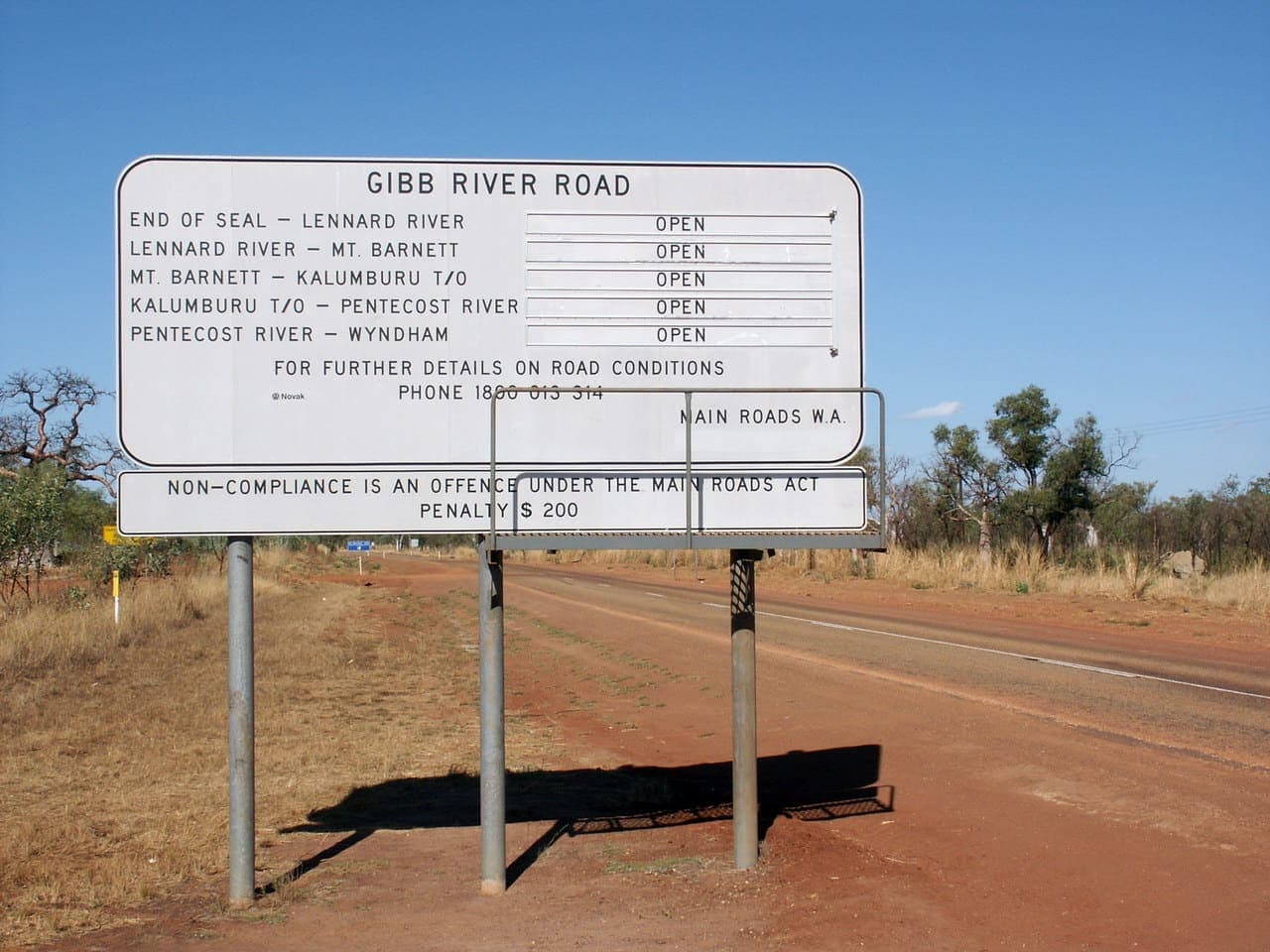
Gibb River Road, Western Australia by Nachoman-au, CC BY-SA 3.0. Source on Wikimedia Commons. Self-hosted locally. See the full image credits.
Family camping is the habit of sleeping outside with people who still need dinner at a predictable hour. It is not a lesser version of a Big Lap. It is how most Australian kids first meet a tent, a night bird and a torch that only works if someone packed the batteries.
This guide covers the basics: a first night, a tent that matches the household, the difference between free and paid ground, and a kitchen that does not depend on a gadget review. For depth on those three decisions, keep choosing a family tent, free camping Australia and the camping gear checklist open in the next tabs.
Start closer than your ambition
The best first family camp is the one you can abandon at 9pm if a child is miserable. A backyard night teaches the pitch. A booked site with toilets teaches the morning. A remote night teaches you whether you packed water. Do them in that order if you can.
“Family camping near Brisbane”, “camping Sydney”, “south coast campgrounds” and “snowy mountains” are all real search habits. They are also reminders that most households start regional. Use the official parks booking channel for the state you are in. This journal will not invent a login walkthrough or a list of secret free sites behind a suburb.
Choosing a family tent
A family tent is a weather shell and a bedroom. Marketing berths lie in a friendly voice. Count the humans and the space they need to sit up and find a jumper. Standing room helps on a wet Saturday. A compact tent helps if you walk to the pad. You cannot have every virtue in one bag.
Practise the pitch at home. If two adults cannot raise it without an argument, do not save the first argument for dusk in a crosswind. Pegs, a mallet, and a fly that you understand will do more for sleep than a new colourway.
Hardware aisles and outdoor shops both sell tents. This desk will not send you to one retailer or crown a model. Read the tent guide for the questions; ignore anyone who says there is a single best family tent in Australia.
Free camping vs paid campgrounds
Paid campgrounds buy a booking, a pad, and usually a toilet story you can tell a child at 2am. National park sites in particular are not “free because nature”. They are managed. Use the park’s current booking system.
Free camping is legal where the land manager says so — some reserves, some rest areas, some properties that invite it. It is not a nationwide right. Ghost camping — holding a site with empty gear, or occupying a place that requires a booking or fee — is how families get moved on and how places lose access. The free-camping guide is explicit because the internet is not.
If you are planning a Big Lap, do not build the budget on unpaid nights. Build it on a mix you can defend, then celebrate a legal free night when you find one.
Camping gear checklist thinking
Shelter, sleep, kitchen, light, first aid, kids, leave-no-trace. That is the whole religion. The checklist article expands each line. The basic version is: everyone sleeps warm enough, everyone eats, everyone can see, someone can treat a cut, and you leave the site better than the last occupant.
You do not need a fridge the size of a cupboard for a single Friday night. You do not need a portable pizza oven to prove love. Borrow. Subtract. The kids will remember the torch walk, not the catalogue.
Food, bedtime, weather
Camp food should be meals you already know how to cook, plus one treat. Novelty cooking is for weekends when nobody is already tired. Water is a plan, not a hope. In snake and sun country, shoes and hats are not optional fashion.
Bedtime moves later around a fire and earlier after a swim. Keep one ritual from home — a book, a song — so the tent is a bedroom, not a kidnapping. If it rains, the ritual still works in a car for twenty minutes.
Weather is a reason to change the plan. Heat is a reason to swim only where the manager says swimming is currently allowed — a rule that matters even more in the Top End and on crocodile waters. Wind is a reason to check pegs. Fire bans are a reason to eat cold food and be proud of it.
Kids, and the rest of the journal
Outdoor time with children is repeated short adventures. The kids outdoors hub and the 51 things before twelve list exist so camping is not the only trick. Fishing, wildlife manners and bush skills all attach to a simple camp.
When you are ready for place rather than method, jump to a hub. Method first keeps the place trip from becoming a gear panic. Place second keeps the backyard night from becoming the whole story.
Why you can trust this guide
Because it will not quote an average campsite price. Because it will not rank a tent. Because it treats a booked toilet as a feature, not a failure of toughness. Camping with kids is logistics plus delight. Get the logistics quiet enough that delight has somewhere to sit.
A weekend shape that works
Arrive with enough light to pitch. Walk the toilets with the kids so the 2am trip is not an exploration. Cook something you have cooked at home. Sit. Do not add a lookout that requires a half-hour drive unless everyone still has legs.
Saturday can be a short walk and a rest. Sunday can be a slow pack, a dry-out if needed, and a shop for the thing you forgot — which you will write on the checklist for next time.
School holidays and crowded sites
School holidays fill the obvious parks. Book where the system allows. Arrive with a backup. Crowds are not a moral failure of camping. They are a calendar. If you want quiet, choose a mid-week night or a less famous reserve, still with permission.
“Camping near me” is a search, not a right. Official maps beat an app pin that was last verified by a stranger in 2019.
When someone hates it
A child is allowed to hate the first night. An adult is allowed to hate the wind. The answer is a shorter next trip, not a lecture about resilience. Resilience grows on repetition. Repetition happens when the last trip was survivable.
If the tent is the problem, read choosing a family tent. If the ground is the problem, read free camping and then book a pad. If the place is the problem, stay local until the method is boring.
Connecting method to place
Once the method is boring, you can take it to the Red Centre or the Kimberley without using the landscape as a teacher of basic peg work. That is the whole point of basics. Boredom is competence.
Neighbours, noise and generators
Campgrounds are shared houses without walls. Keep music in headphones. Keep headlights out of other people’s doors. If generators are allowed, use the window the host set. If they are not, eat a cold dinner and be the family other people like to camp beside.
Kids at dawn are a fact. Teach “inside voice until the kookaburras finish”, or whatever rule you can enforce with a straight face. Other people’s dawn kids are also a fact. Pack earplugs.
Toilets, water and the unglamorous core
Show children the toilet block in daylight. Carry a bottle of water to the block if the tap is a rumour. Do not assume tank water is drinking water unless the manager says so. Boil or treat if you are unsure.
A small broom for the pad and a bag for rubbish are more useful than a decorative banner. Leave-no-trace is easier when it is a habit, not a speech.
Two-car families and one-car families
Two cars mean a sick-child exit without packing the universe. One car means you pack so you can leave in twenty minutes if the weather turns. Both are fine. The one-car version needs more ruthless subtraction on the checklist.
A closing invitation
Book a nearby site. Pitch in light. Cook a known meal. Walk a short track. Sleep. Go home. Do it again. That loop is family camping Australia. The Big Lap can wait until the loop is boring. Competence is repetitive on purpose. When it is boring, you are ready for a longer place chapter — not before. Boredom, in this narrow sense, is the goal.
Filed under camping, family, kids. Return to the Family camping hub.
Questions families ask
- How do I start family camping in Australia?
- Pitch at home or book a nearby site with toilets, keep the first night short, and treat the trip as a sleep-and-meal rehearsal rather than a wilderness exam.
- What is the average cost of a campsite in Australia?
- There is no useful single average. Council, park and private sites all price differently — check the booking page you will actually use.
- Can I camp with a family tent near a city?
- Often yes, on booked park or council sites within a weekend drive. Search the official parks page for the state you are in rather than a generic “near me” promise.
Pitch a family travel note
This journal welcomes considered guest posts on family camping and Australian road travel. Editorial citations stay followed; paid placements are marked sponsored.
Contact the desk about a guest post · Browse the adventure journal