Choosing a family tent
How to choose a family tent in Australia — sleep count, weather, packed size and practice — without a product ranking.
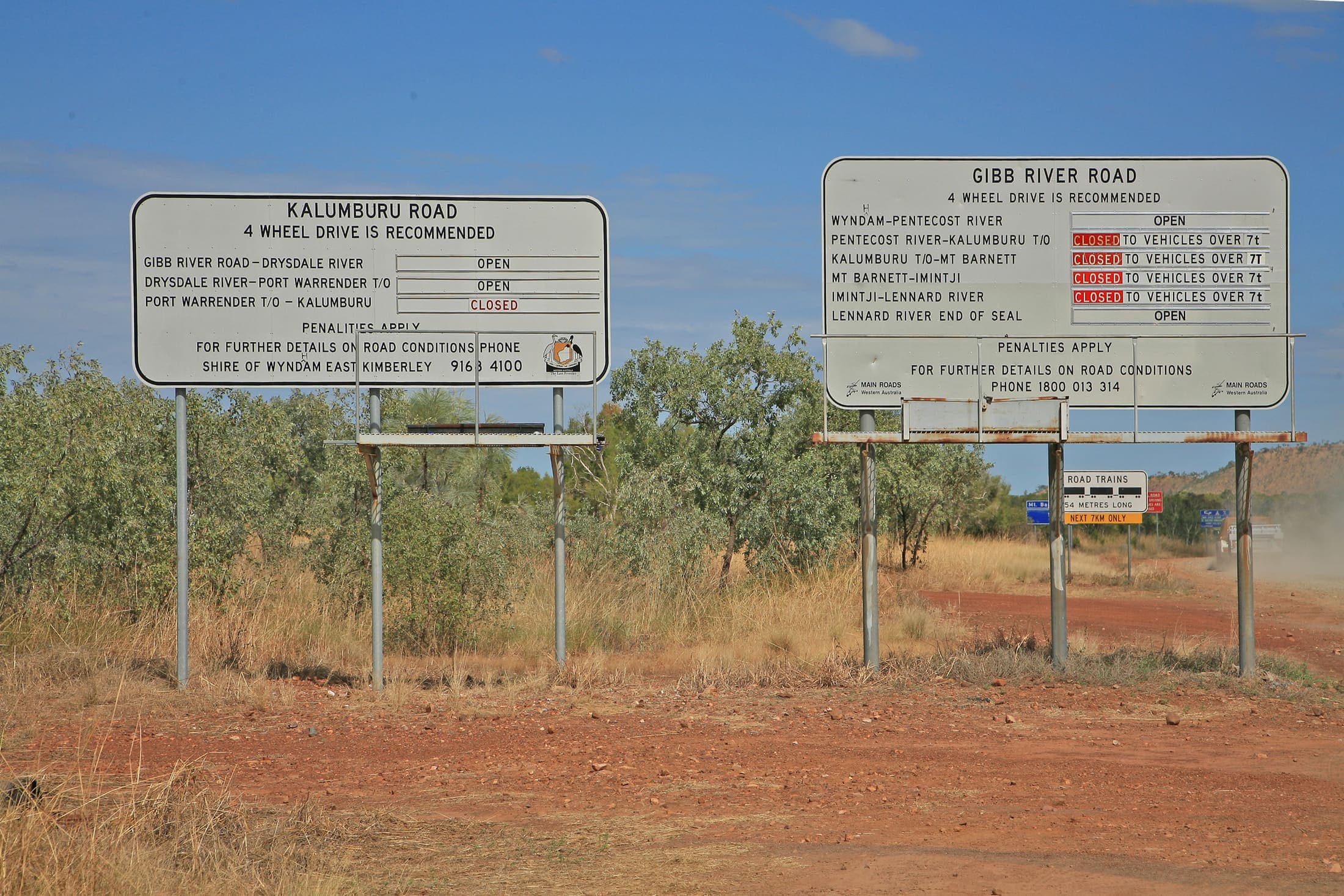
Gibb River Road, Western Australia by W. Bulach, CC BY-SA 4.0. Source on Wikimedia Commons. Self-hosted locally. See the full image credits.
People type “best family tent Australia” because they want the decision to end. The decision does not end in a ranking. It ends when your household can sleep in weather you actually get, and you can still close the boot on the esky.
This guide is the criteria. It will not name a winning model, a shop, or a yearly award. Catalogues change. Children grow. Wind does not care what won a prize.
Sleep count is not berth count
A “six berth” tent may sleep four humans and two duffel bags in comfort, or six people who will argue about elbows. Count the people who will actually lie down. Then ask whether anyone needs to sit up and read. Kids who share at home may not share on a mat that rustles.
If you travel with a toddler who still needs a cot-shaped space, that space is part of the count. If a teenager will mutiny without a vestibule to sulk in, that is also architecture.
Weather you expect, not weather you deserve
Australian family camping includes coastal drizzle, inland wind, alpine cold and tropical moisture — not usually all in one weekend. Buy for the trips you will take this year. A Kimberley dry-season night and a south-coast winter night are different envelopes.
Look at hydrostatic head and seam talk only as a reminder that rain is a design problem. Look at the fly: does it cover the doors? Can two people pitch it in a breeze? Peg points that tear off on night one are not a character-building exercise.
Canvas can be lovely and heavy. Polyester can be light and loud. Inflatable frames trade poles for pumps and a different failure mode. None is morally superior. Your back and your roof rack will vote.
Packed size and the rest of the car
The tent that does not fit in the car is not a tent. It is a garage ornament. After you add the camping gear checklist — sleep, kitchen, kids — try a packed rehearsal. If the dog crate wins, the tent loses.
Roof bags and trailers change the answer. So does a Big Lap versus a single Friday. Do not buy expedition canvas for two local nights unless you enjoy the ritual.
Pitch practice
Pitch at home. Time it. Do it again with one adult “busy with a child”. If the inner and fly relationship only makes sense on the internet, it will not make sense at dusk. Colour-coded poles help. Missing poles do not.
Practise packing it dry. Practise the miserable version: packing it damp and drying it at home so you do not store a science experiment.
Living space versus sleeping space
Family tents earn their keep in the hours between dinner and sleep, especially when it rains. A porch for shoes, a place to stand, a door you can use as a windbreak — these are not luxuries. They are how you avoid dressing a child in the rain.
Cabin-style tents feel house-like and catch wind. Tunnel tents can be efficient and darker. Swags are not family tents; they are a different sleep culture and a poor shared-play space.
Kids, heat and darkness
Dark fabric can help afternoon naps and hurt heat. Ventilation is a safety and comfort issue. Never run heaters or cookers inside a tent. That sentence is not optional.
A night light that does not keep the early waker scanning for possums is worth more than a decorative lantern. The kids outdoors notes will tell you the rest of the day; this page is the bedroom.
Where this sits in the journal
Read family camping basics for the first-night plan. Read free camping so you do not pitch on a closed reserve. If you are taking the same tent toward the Gibb or the Red Centre, add dust, hard ground and heat to the criteria.
There is still no best family tent in Australia. There is a tent you have practised, packed and forgiven. That is the one that gets used, which is the only ranking that matters.
Doors, weather and the 2am exit
A second door is how an adult leaves without walking on a child. A vestibule is how wet shoes stop joining the beds. These are design questions, not upgrades for enthusiasts.
If you camp in mozzies, mesh that actually zips matters more than a brand story. If you camp in wind, a lower profile matters more than Instagram height. If you camp with a toddler, a dark room at noon is a gift.
Hire, borrow, then buy
Hiring a tent for a booked weekend is allowed. Borrowing from a friend is allowed. Buying first is how garages fill with unused polyester. After one hired night you will know whether you want standing room or a smaller bag.
This is also how you avoid the “best tent” video that was filmed on a calm lawn. Your car park will not be a lawn.
Repair and retirement
Tape, a spare pole section if you can get one, and the humility to retire a tent that has become a leak with memories. A failed seam on a Big Lap is a town problem; a failed seam on a Friday is a reason to go home and book again next month.
Do not store a wet tent. Do not treat mildew as ambience.
A closing test
Can two of you pitch it in twenty minutes with one child “helping”? Does it fit in the car with food? Did you sleep? If yes, you have the best family tent in Australia for your hallway. If no, change one variable — site, season, or shelter — and try a shorter night. The family camping hub will still be there.
Floor, flies and the reality of kids
A sewn-in floor keeps toys and sleepy knees off wet ground. A separate groundsheet can save a floor you paid for. Kids will still drop a fruit strap in the doorway. Design for that.
A full fly over doors is how you cook-adjacent without inviting rain onto beds. A partial fly is how you learn about sideways weather. Read the pictures as weather diagrams, not as lifestyle.
Colour, heat and finding home at night
A pale tent can be cooler and harder to spot in a crowded park. A bright tent is easier for a child to find after toilets. Neither is a moral stance. Head-torch discipline matters more than fabric colour.
Guy lines are trip hazards. Teach “high knees at night” and use line-markers if you have them. A broken collarbone is a poor souvenir.
When a swag or a trailer tent is the real answer
Some households sleep better in swags and a shared tarp. Some buy a camper trailer and never touch a pole again. Those are valid family shelters. They still need weather sense, a packed-car test, and practice. This guide’s title says tent because that is the search; the criteria still apply.
If you tow, you have also chosen every tight campground as a skill test. See the Big Lap vehicle notes before you buy canvas to match a van.
Buying used
A used tent can be excellent if you pitch it in the seller’s driveway and spray it, or at least inspect seams and poles. A used tent can be a gift of mildew. Smell it. Check the bag weight against your car. Do not be polite about leaks.
Then go home and do the twenty-minute pitch test again, because their lawn is not your dusk.
A last word on “the best”
Search results will keep offering a winner. Hardware catalogues will keep offering a bundle. Your household will keep changing height, patience and the size of the car. Revisit the criteria once a year, not the leaderboard. If the tent still pitches, still fits, and still sleeps the people you actually travel with, keep it. If it does not, change one variable and try a short booked night before you spend again. That is how a family tent gets chosen in Australia: by use, not by a headline. For the first-night plan around that tent, use family camping basics. For the ground under it, use free camping Australia and then book a pad if the rule is not clear. A clear rule and a practised pitch beat a famous model every time. If you remember nothing else, remember the driveway test, the boot test, and the first wet night you chose not to buy your way out of. Those three tests will outlast any seasonal catalogue, and they will still apply when the children are taller and the car is smaller. That is enough criteria to choose, and enough criteria to stop choosing.
Filed under camping, family. Return to the Family camping hub.
Questions families ask
- What is the best family tent in Australia?
- There is no single best family tent. Choose for real sleepers, the weather you expect, and whether the packed bag still fits in the vehicle.
- Should I buy a canvas tent or a polyester tent?
- Canvas often handles abrasion and some weather stories better and weighs more; polyester packs smaller and can be noisier in wind. Match the material to how you travel.
- How many berths do I need?
- More than the brochure’s sleep count if anyone wants bag space or a wet-weather dressing room. Count humans, then add room to live.
Pitch a family travel note
This journal welcomes considered guest posts on family camping and Australian road travel. Editorial citations stay followed; paid placements are marked sponsored.
Contact the desk about a guest post · Browse the adventure journal