Fishing through the generations
How families hand on fishing in Australia — licensing, water safety and patience — without gear-brand reviews or invented rules.
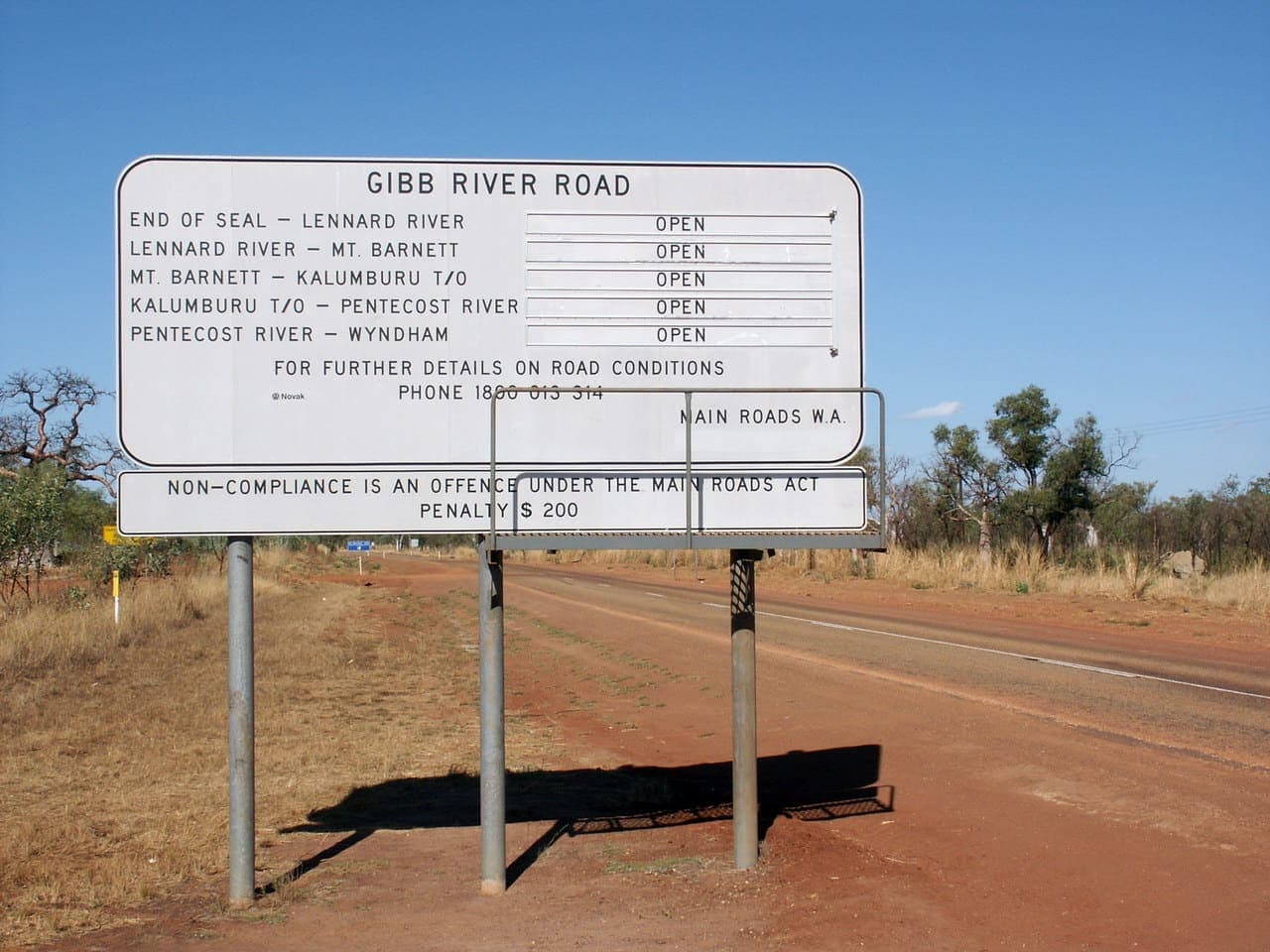
Gibb River Road, Western Australia by Nachoman-au, CC BY-SA 3.0. Source on Wikimedia Commons. Self-hosted locally. See the full image credits.
Fishing through the generations is not a brand story. It is a permission story, a safety story, and a patience story. An adult who loves a river wants to hand that love to a child. The child wants to know whether this will take all afternoon. The water does not care about either wish. If you can hold those three facts at once, you can fish as a family.
This guide will not review rods, reels, lures or boats. The old archive once ran product notes. This journal will not revive them. If you fish, you need the current state or territory rules, a lifejacket habit around boats, and a plan for hooks and heat. You need a place you are allowed to stand. You need a way to go home when the child is done.
The kids outdoors hub holds this essay beside the 51 outdoor things menu. Fishing is one cluster on that menu, not a higher grade of childhood. Households that never wet a line can still be outdoor families. Households that fish every weekend still need the rubbish rule and the swim rule.
What you are actually handing on
You are not handing on a secret spot as if it were a will. Spots close. Rules change. Pressure on a popular bank changes the welcome. What transfers is a way of arriving: we checked the licence, we checked the weather, we have water, we know whose land this is, we will not leave line in the tree.
You are handing on a tempo. Fishing is mostly waiting. Children can learn waiting if the session is short enough and the adult is not performing expertise. A grandparent who can sit without narrating every cast is worth more than a perfect knot. A parent who can say “nothing is biting and this still counts” is doing the intergenerational work.
You are handing on manners toward animals. A fish is not a toy. A crab is not a prop. A bird diving on your bait is not an insult. If you keep a fish, you kill it cleanly and you use it. If you release a fish, you do it with wet hands and the current science the fisheries agency is asking for, not with a folk story from a pub. If the park says this water is not for fishing, you fold the rod.
You are handing on a relationship to rules. Children notice whether the adult lies about a bag limit. They notice whether the adult fishes a closed season “just quickly”. They notice whether the adult chucks a frame off the jetty in crocodile country. The lesson they keep is the one you demonstrate when nobody is scoring you.
Licensing is part of the outing
There is no single national ticket
Australia does not have one fishing licence. States and territories write their own recreational rules. Some waters are closed. Some species are protected. Some methods are banned. Some children are exempt below an age that this journal will not invent, because those ages change and because exemptions still sit inside other rules. Some Aboriginal fishing rights and some community arrangements are not a tourist loophole.
The adult’s job, before the first cast, is to read the current page for the water you will stand beside. That may be a state fisheries page, a marine park page, or a national park page. In Kakadu, Parks Australia treats fishing as an activity that sits inside Crocwise safety and park rules. In Territory parks more broadly, NT Parks is the land manager. In Western Australia, Explore Parks WA sits beside the state’s fisheries rules. This journal will not merge those into one cheerful map.
Buy or hold whatever licence the jurisdiction asks for. Carry proof the way they currently ask you to carry it. If the child needs their own licence, get it with them so they see the transaction as part of fishing, not as adult paperwork that happens in another room. If the child is exempt, say so out loud: “You are allowed today because of your age, and these other rules still apply.”
Permits for special waters, special methods, or special access are the same habit. This journal will not invent a permit cost. The agency that collects the money publishes the figure.
If you do not know who manages the water, you do not fish it yet. That sentence keeps families out of trouble more often than a lucky cast.
Safety is not a mood
Hooks go into hands, feet, dogs and eyes. Pack pliers. Pack a way to cut line. Pack the humility to stop casting when a younger child runs behind the swing of the rod. Teach a clear “don’t walk behind me” rule. Teach “we never throw a hook toward a person”. Teach “we do not run with a rod”.
Water is the larger hazard. Banks slip. Rock is slick. Waves arrive in sets. Estuaries have currents. Inland rivers rise after rain you did not see. The Top End has crocodiles in most Kakadu waterways; Parks Australia’s safety pages are explicit that crocodiles attack people, that they hunt while submerged, and that fishing and boating are Crocwise activities. If you take children to that country, the briefing comes before the bait. Stay back from the edge. Do not enter the water to retrieve a lure. Do not clean fish at the bank. Do not hang arms over the side of a boat. If that sounds like it would spoil the fun, pick a different water.
Lifejackets around boats are a habit, not a rating of the day’s weather. Kids belong in them. Adults who want to model something useful belong in them too. This journal will not write a skipper course. It will say that weather windows are not suggestions, that fuel on the water is a plan, and that a child who cannot swim still needs more than optimism.
Heat sits on the same list as hooks. A jetty in January is a frypan. Hats, water, shade, and a finish time that is earlier than your nostalgia. In the Centre, NT Parks already warns that hot months exhaust people. A “quick fish at dusk” can still be a heat event if the afternoon was spent on a gorge walk. Stack hazards and you will meet them together.
Night fishing with children is optional and often unwise. You add lost hooks, lost children, and animals you cannot see. If you do it, you shrink the session and you light the work, not the water in a way that ruins everyone else’s bank.
Injured wildlife, including birds tangled in line, is a reason to carry the ability to cut line and a reason to tell the park or the relevant rescue service. It is also a reason to take your scraps with you.
Patience is the curriculum
A child who catches a fish on the first drop may still be a child who cannot fish. A child who watches a float for twenty minutes and then eats a sandwich is closer to the thing you meant to hand on.
Design a short session
Design the session for patience, not for a photograph.
- Keep the first outing short enough that ending feels like a choice.
- Fish a place where the child can stand without bracing against a cliff.
- Use a simple method the adult can re-tie without a speech.
- Let the child do the parts they can do, even if the cast is ugly.
- Narrate less. Point at a bird. Eat something.
- Celebrate a bite that did not become a fish.
- Stop while people are still speaking kindly.
Boredom is information. It may mean the session is too long. It may mean the child needs a job — holding the net, watching the rod tip, being the person who remembers the drink bottles. It may mean this child does not like fishing. That last possibility is allowed. Forcing a tradition is how traditions die in the car on the way home.
Generations fail this when the adult needs the child to complete the adult’s childhood. The river is not a time machine. If you always fished dawn on a workday before school, your child still has a nervous system of their own. Translate the love. Do not photocopy the timetable.
Stories help if they are allowed to be dull. The time it rained. The time the only catch was a shoe. The time a grandparent packed too much bread. Leave out the illegal bits if you have them. Children will remember the ethics you laugh off.
Places, parks and the “where to fish” problem
People want a list of spots. This journal will not publish one that pretends to be current, secret, or ranked. Pressure on a named bank is how families meet conflict. Local knowledge belongs to locals and to the managers who close a season because a species needs it.
What you can do is choose a category.
- A local freshwater edge that is managed for recreation, with toilets and a car park, for the first dozen outings.
- A beach or jetty where the council and fisheries rules are easy to read, and where a child can retreat to shade.
- A park water that explicitly allows fishing, after you have read the park page.
- A boat only when the skipper is actually a skipper and the child is actually in a jacket.
Kakadu fishing, if you ever add it, is not a beginner category. It is a crocodile-country activity inside a jointly managed park. Litchfield’s famous visitor story is swimming at designated sites, not a family fishing clinic. The Kakadu and Litchfield itinerary is the pairing guide; do not flatten it into a “where to wet a line” post.
Christmas Island’s headline is crabs, not a lure. If you are on the island for the red crab migration, the road belongs to the crabs. Do not be late to a closed crossing because you wanted one more cast.
On a Red Centre road trip, water is scarce, precious and often not a fishing story. Do not treat a desert waterhole as a farm dam. NT Parks manages those holes for habitat and for visitors who came to look.
If your household also camps, the family camping pages cover nights, food and permission. A rod in the awning does not change those rules. You still book when booking is required. You still do not clean fish where a crocodile or a goanna will learn to visit people.
Gear without a catalogue
You need a legal way to present a hook or a lure to a fish, a way to take a fish if you keep one, and a way to stay comfortable enough to be kind. That is the list.
Beyond that, this journal will not name a model. Hardware aisles and fishing shops both sell simple outfits. Borrow before you buy. Buy once the child has asked to go again. Do not buy a more complicated reel to justify a tradition the child has not consented to.
What matters more than the brand:
- Line that is not a bird trap when it snaps.
- A hook size the adult can manage around a child.
- Pliers, sunscreen, water, and a bag for rubbish.
- Shoes that can stand on wet rock.
- A towel that may never be used for swimming.
- A plan for the fish — ice, a legal keep, or a careful release.
If someone offers you a boat, the boat is a safety system first. If someone offers you a “hot tip”, the tip is still subject to the printed rule. If someone offers you a discount card, that is their commercial life, not this page’s recommendation.
The archive’s road tests are not coming back as reviews. If you need equipment advice, ask a person who fishes your water, then still read the rule book.
Food, waste and the end of the fish
Keeping a fish is a different lesson from catching one. Children should see the whole sentence: we killed this, we will eat this, we will not waste this. If you are not prepared to clean a fish in front of a child, you may not be prepared to keep one. That is an ethics decision, not a toughness test.
Clean where the rules allow. In crocodile country, Parks Australia is explicit about not cleaning at the water’s edge and not putting offal in the water. Elsewhere, bins, frames, and flies are still your problem. Frozen bread, leftover bait and tangled packets go out with you.
If you feed a family from a catch, say thank you to the water in whatever language your household actually uses. Do not invent a ceremony that is not yours. Do not take more than the bag limit so the ceremony looks abundant.
How generations go wrong — and how they recover
They go wrong when the adult is ashamed of a fishless afternoon. They go wrong when a child is mocked for fearing the hook. They go wrong when a closed sign becomes a dare. They go wrong when the only stories are conquest stories. They go wrong when a girl is handed the sandwich and a boy is handed the rod as if that were science.
They recover when the next outing is shorter. When the child chooses the sandwich and the rod in either order. When the adult apologises for the lecture. When a season is skipped because school or weather or money said so, and the river is still there. When a grandparent is invited and allowed to sit.
If a generation in your family did not fish, you are allowed to start. If a generation fished in ways that would now be illegal, you are allowed to keep the love and drop the method. If a generation only fished on Country with permissions you do not hold, you do not copy that as a weekend hobby.
Sitting this essay on the rest of the journal
The 51 things list treats fishing as optional patience. The kids outdoors hub treats boating as a safety sport. The place guides — Kakadu, the Red Centre, Christmas Island — treat water as something managers speak about in the present tense.
A Big Lap can include fishing days. It should not be built on the idea of a free feed every night. Fisheries rules travel with you as you cross borders. What was legal in one state at breakfast may not be legal in the next state at dusk. That is the licensing chapter again, just with more kilometres and no invented count of them.
Main Roads WA will not tell you how to fish. It will tell you whether the western road you wanted is open. Closed roads and closed seasons are cousins: both mean you pick another plan.
What this guide will not do
It will not name a best rod. It will not invent a licence fee. It will not publish a secret GPS pin. It will not tell you a crocodile-free myth. It will not pretend children are automatically licensed. It will not reprint an old road test.
When a fisheries rule changes, the fisheries page wins. When a park bans fishing from a bank, the park wins. When a child says they would rather look for crabs on a legal beach, the child can win the afternoon.
A first intergenerational session that might work
Pick water you already understand. Check the licence. Pack shade and a short enough clock. Let the oldest fisher in the household come if they can sit without competing. Let the youngest fisher leave with the same dignity as someone who caught dinner.
Tie one simple rig. Say the safety sentences once. Fish. Eat. Stop. On the way home, tell the dull version of the day. That dull version is the heirloom.
If they ask to go again, you have handed something on. If they do not, you have still offered it, which is the other half of a generation: the right to decline a rod and still be welcome on the bank.
Filed under fishing, kids, family. Return to the Kids outdoors hub.
Questions families ask
- Do kids need a fishing licence in Australia?
- It depends on the state or territory, the child’s age, and the water — the adult checks the current local rules before anyone ties a knot, because this journal will not invent a national exemption.
- How do you teach a child to fish?
- Start with a short session, a simple rig, a clear safety briefing, and permission to catch nothing; patience is the lesson, not a trophy photograph.
- Is fishing safe for families?
- It can be, if you treat hooks, heat, boats and wild water as hazards, wear lifejackets around boats, and stay out of crocodile habitat unless you are following current park advice.
- Where can families fish in Australia?
- In waters the land and fisheries managers allow, at times and with methods those managers currently publish — not wherever a photograph looks pretty.
- What gear do you need to fish with kids?
- The simplest legal outfit the adult already understands, plus sun, water, pliers, and a way to keep hooks away from faces — not a branded kit this journal will not review.
- Why fish with children if they get bored?
- Because waiting, looking after a line, and being kind when the fish do not come are skills that travel — and because you can stop the session the moment it stops being kind.
Pitch a family travel note
This journal welcomes considered guest posts on family camping and Australian road travel. Editorial citations stay followed; paid placements are marked sponsored.
Contact the desk about a guest post · Browse the adventure journal