51 outdoor things to do before you're 12
An invitation list of outdoor things for kids in Australia — bush skills, camping, fishing and wildlife manners — not a race or a ranked contest.
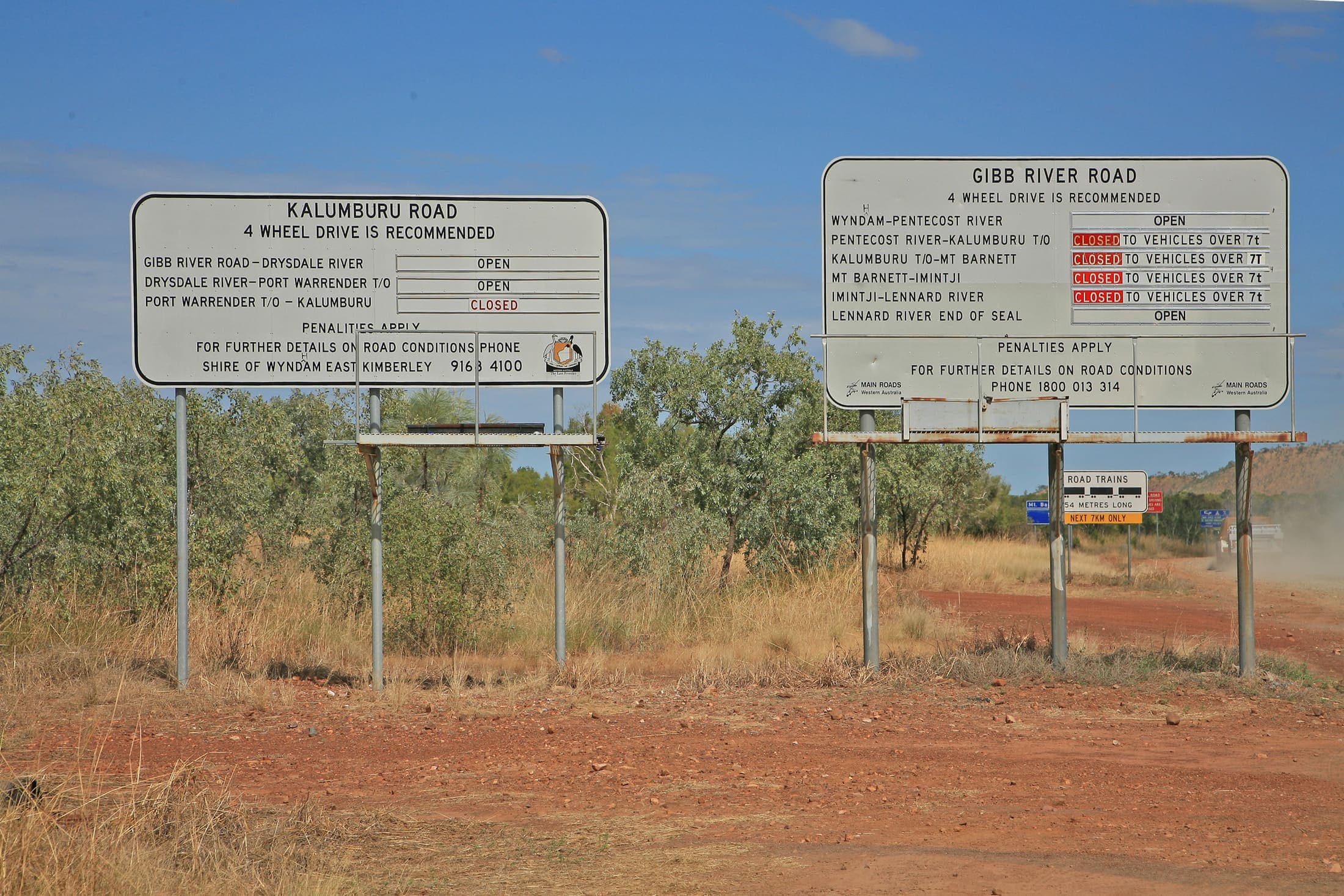
Gibb River Road, Western Australia by W. Bulach, CC BY-SA 4.0. Source on Wikimedia Commons. Self-hosted locally. See the full image credits.
Kids do not need a circumnavigation to love the outdoors. They need repeated, slightly adventurous hours in places you can leave if someone melts down. This list is an invitation, not a race to fifty-one ticks. It is not a ranking. Item order is not a grade. If your household does three of these things often, and does them kindly, you are already in the work this journal cares about.
Twelve is a story age, not a deadline. Children younger than that can try almost everything here in a smaller dose. Children older than that are not too late. Adults who missed a childhood in tents are allowed to start now. The kids outdoors hub is the short doorway. This page is the long menu.
What the list is not: a contest between families, a sponsored gear challenge, a set of invented distances, or a promise that every park is a swimming park. Swim only where the managing agency currently says so. In the Top End that sentence is a crocodile sentence. In the Centre it is a desert-waterhole sentence. On Christmas Island it is a “the crabs have the road” sentence.
Citeable conditions still belong to Parks Australia, NT Parks, Explore Parks WA and Main Roads WA when those places are on the map. This journal will not invent a campsite average or a “best” beach.
How to use a menu instead of a scorecard
Print it if you like. Do not laminate it as a test. Let a child circle what sounds good. Let them cross out what sounds like someone else’s holiday. Repeat the same creek walk until they know the stepping stones. That repetition is the point. Novelty is optional.
A few house rules travel with the menu:
- The adult in charge can cancel any item for weather, fire, heat, wildlife or mood.
- Turning back is a completed activity.
- We stay on marked tracks in parks.
- We do not chase animals.
- We do not invent permission to camp, fish or swim.
- We leave a site cleaner than we found it.
If you want method — tents, stoves, the difference between a booked pad and a hopeful pull-off — use the family camping hub. If you want a continent loop, use the Big Lap pages. If you want this list, stay local until local feels easy.
Bush skills that travel
Start with shade, water and the path
These are the items that still matter when the famous lookout is closed.
- Put a jumper on before you are cold, and take a hat off before you invent a tantrum.
- Carry your own water bottle and drink from it without being asked three times.
- Stay where you can see the adult, and know the meeting tree if you do not.
- Walk on the marked path even when a shortcut looks soft.
- Recognise a park sign as a rule, not as a suggestion for other people.
- Name two plants or birds you actually saw, without needing a perfect identification.
- Use a map of the picnic area — not a wilderness exam, just “the toilets are this way”.
- Pack out your rubbish, including the tiny bits that pretend to be organic.
- Say “I need a rest” before you need a rescue.
- Help pitch the part of the shelter you can reach, then let the adult finish the weatherproofing.
- Practise a simple first-aid story: who is in charge, where the kit lives, we do not drink from mystery water.
- Learn the swim rule for this place today, which may be “we do not swim”.
Those twelve invitations are already a childhood. You can spend years on them in a suburban reserve. Map-and-compass, night navigation and remote recovery can wait until the child who will use them is the same person who will carry the water.
Bush skills also include knowing when a track is not for this child on this day. That is not failure. That is the skill the gorge will still respect tomorrow.
Camping and nights away
Camping is ordinary and excellent. It does not require a desert crossing.
- Sleep in a backyard tent before you sleep in a national park.
- Sleep one night in a booked campground with a toilet you can find in the dark.
- Help cook a meal that does not depend on a gadget — a pan, a heat source, a simple food.
- Wash a plate in a tub and understand that a creek is not a sink unless a sign says it is.
- Sit through a rain hour under a shelter without declaring the holiday ruined.
- Make a bed that stays warm, then get up to look at the sky anyway.
- Listen for night birds, possums, or just wind, and talk about what is ordinary.
- Leave the site so the next family cannot tell you were messy.
- Try a rest afternoon instead of a second walk.
- Share a torch rule: torches are for seeing, not for fencing.
If free camping is on your mind, read the family camping pages before you romanticise unpaid nights. Permission is the activity. Ghost camping that holds a site against the rules is not on this list.
Water, creeks and the ocean
Ask who manages the water
Australia’s water is the best and the least negotiable part of the menu.
- Paddle your feet where the park or council currently allows it.
- Skip a stone, then put the rest of the stones back.
- Watch a rock pool without taking the animal home.
- Build a sand channel that the tide will delete, and let the tide delete it.
- Learn a rip story from a lifeguard-patrolled beach, then swim only between the flags.
- Wear a lifejacket as a habit around boats, not as a mood.
- Cross a shallow, known creek on a marked path — or decide not to.
- Sit and watch rain on a dam or a river without needing to throw anything in.
- Learn why some Top End water is crocodile habitat, using the Kakadu and Litchfield rule: we swim only where the park says.
- Learn why some desert waterholes are cold, deep, or closed, using the Red Centre habit of believing NT Parks.
This journal will not invent a “safe swimming map” for the nation. Parks Australia’s Kakadu safety pages are severe for a reason. NT Parks marks Litchfield sites that swim and sites that do not. Coastal flags are a different system again. The child’s skill is asking “who manages this water?” before the towel comes out.
Fishing as patience, not as a trophy
Fishing belongs on a kids’ list only when licensing and safety come first. The long essay is fishing through the generations. The invitations here are smaller.
- Get the licence the state or territory asks for, with the adult, as part of the outing.
- Rig a simple line you can actually use, without a brand lecture.
- Sit still longer than you wanted to.
- Catch nothing and still call it fishing.
- Catch something and handle it as the rules require — keep, release, size, bag.
- Keep hooks away from eyes, dogs and the next child’s bare feet.
- Clean up every scrap of line.
- Let a grandparent or an older cousin tell a river story that is allowed to be dull.
Fishing is not a ranking of reels. It is a way to practise waiting. If the household does not want to fish, skip this cluster. The list will not mind.
Wildlife manners
Wildlife is not a petting zoo with better lighting.
- Watch an animal without changing its path.
- Use quiet voices at a hide, a billabong, or a nest sign.
- Leave shells, feathers and bones where you found them if the park asks you to.
- Learn one “do not feed” rule and keep it when the animal looks friendly.
- Give snakes, dingoes, goannas and nesting birds more space than your camera wants.
- Talk about crocodiles as ambush animals, not as cartoon villains.
- Time a trip, if you can, for a real movement of animals — the Christmas Island red crab migration is the example this journal will name — and then go slowly enough that the animals keep the road.
- Look at tracks in mud and do not need to own the animal that made them.
- Sit still until a bird comes back.
- Understand that a closed boardwalk is a kindness, not a conspiracy.
Parks Australia’s island, Kakadu and Uluru pages are full of living culture and living animals. The manners transfer: we watch, we do not chase, we do not collect the rare thing.
Weather, sky and the unglamorous hours
- Watch a storm from a safe veranda or car, and talk about when you would not be outside.
- Learn the feel of a hot day that means you walk at dawn or not at all.
- Find the Southern Cross, or fail to find it and enjoy the failure.
- Wake for a dawn that is ordinary and still worth seeing.
- Sit in fog, or drizzle, or a wind that makes cooking annoying.
- Keep a tiny weather diary for a weekend: wind, cloud, mood.
- Practise shade as a skill — the tree, the tarp, the siesta.
These items look like non-events. They are how children learn that the outdoors is a climate, not a backdrop.
Place invitations, not a trophy map
You do not need all of these places. You need one place you return to, and maybe one place that surprises you.
- A local bush reserve you can reach after school.
- A booked national park night in your own state.
- A waterfall or gorge walk that matches the legs in the car.
- A desert morning on a sealed West MacDonnell road, if the Centre is on your map.
- A Top End day that includes the crocodile briefing.
- A ferry, a jetty, or an island path walked slowly.
- A country town swimming pool as a valid “outdoors” reset in a heatwave.
- A long picnic that never becomes a hike.
- A return visit to the same campsite so it can become “ours” without being owned.
If a Big Lap happens later, it will be easier because these ordinary items already exist. If it never happens, the list is still complete.
Kindness, culture and the social outdoor
The outdoors includes other people, and it includes country that has names older than the picnic table.
- Learn the name of the Country you are on, and say it without performing.
- Follow photography rules at a cultural site.
- Let a ranger talk finish before you ask about the kiosk.
- Make room on a path for a slower group.
- Share a lookout without claiming the rail.
- Thank a volunteer or a campground host if you meet one.
- Invite a friend who has not camped, and let their first night be easy.
- Do a small help — a neighbour’s tarp, a dropped peg — without a speech.
Uluru-Kata Tjuta is a Parks Australia reminder that a rock is not a climb and a story is not a souvenir. Local sites closer to home have their own rules. The invitation is the same: we are guests.
A few more invitations so the menu stays wide
- Draw the view badly and keep the drawing.
- Follow a marked nature trail and ignore the urge to time it.
- Learn four knots that actually do something — or one knot used well.
- Push a bike on a legal path, then walk when the path asks you to walk.
- Photograph a leaf, then put the phone away.
- Taste a food cooked outside that you would not choose in a kitchen.
- Read a book in a tent while everyone else “does an activity”.
- Help plan tomorrow with a child-sized vote: walk, water, or rest.
- Write a postcard, or a note to a grandparent, that tells the dull truth of the day.
Count them if you insist: the clusters above are more than fifty-one invitations if you split them, and fewer if you combine them. That is the point of refusing a numbered contest. The title is a wink at a childhood list, not a leaderboard. If you need a number, use this one: one more hour outside than you had planned, then home before anyone is ruined.
What if a child hates it?
Then you shrink the dose. Backyard first. Short walk. Familiar toilet. Food they already like. A story that does not shame them for wanting the car. Some children come around. Some children will always prefer a pool with tiles. Both can still learn the swim rule, the rubbish rule, and the “we do not chase the animal” rule.
Do not use this list as leverage in a family argument. Do not compare your child’s tally to a stranger’s. Do not announce that a real childhood requires Kakadu. Kakadu is a wonderful chapter for some households. A creek behind a sports oval is a wonderful chapter for others.
If fear is the problem — dark, spiders, boats, silence — name it and work next to it, not on top of it. Lifejackets, torches, and leaving early are tools. Mockery is not.
What this guide will not do
It will not number the items as a ranking. It will not attach ages as commandments. It will not sell a kit. It will not invent a badge system. It will not tell you the Christmas Island crabs move on a fixed calendar date. It will not tell you every Australian child must fish.
When a park rule changes, the park page wins. When a child changes their mind, the child wins the afternoon.
A way to start this month
Pick one bush-skill item, one night-away item if you are ready, and one manners item. Do them near home. Read the official page for the reserve you use. Come back to the menu when the household is bored in the right way — the way people get bored just before they are ready for a slightly longer walk.
If fishing appears, open the fishing essay before you buy a story about gear. If an island migration appears in a later year, open the red crab guide before you lock school holidays against rain that has not fallen.
The outdoors will still be there after the twelfth birthday. The invitation does not expire. What expires is the idea that you had to finish a list to be allowed to love a tree.
Filed under kids, family. Return to the Kids outdoors hub.
Questions families ask
- What outdoor activities work for kids in Australia?
- Short local camps, creek walks, fishing where it is licensed and safe, stargazing, and park visits with a clear swim-or-no-swim rule — adjusted for age and weather.
- Is the list of 51 things a challenge to finish?
- No. It is a menu. You can repeat three items for years and skip the rest, and you have still done the outdoors properly.
- What bush skills should kids learn first?
- Shade, water, staying with the group, staying on the path, and saying when they have had enough — map-and-compass can wait.
- Can these activities be done without a Big Lap?
- Yes. Most of the list lives in ordinary parks, beaches and backyards; a circumnavigation is optional.
- How do fishing and wildlife fit on the list?
- As permission-and-manners activities — licensed fishing with patience, and wildlife watching that leaves animals enough space, including events such as the Christmas Island red crab migration.
- What if my child is older than 12, or younger?
- Use the same menu. Twelve is a story age, not a gate, and turning back remains a skill at every age.
Pitch a family travel note
This journal welcomes considered guest posts on family camping and Australian road travel. Editorial citations stay followed; paid placements are marked sponsored.
Contact the desk about a guest post · Browse the adventure journal