Planning a Big Lap of Australia
How long a family Big Lap takes, clockwise versus anticlockwise, and the vehicle decisions that shape a loop around Australia — without invented costs.
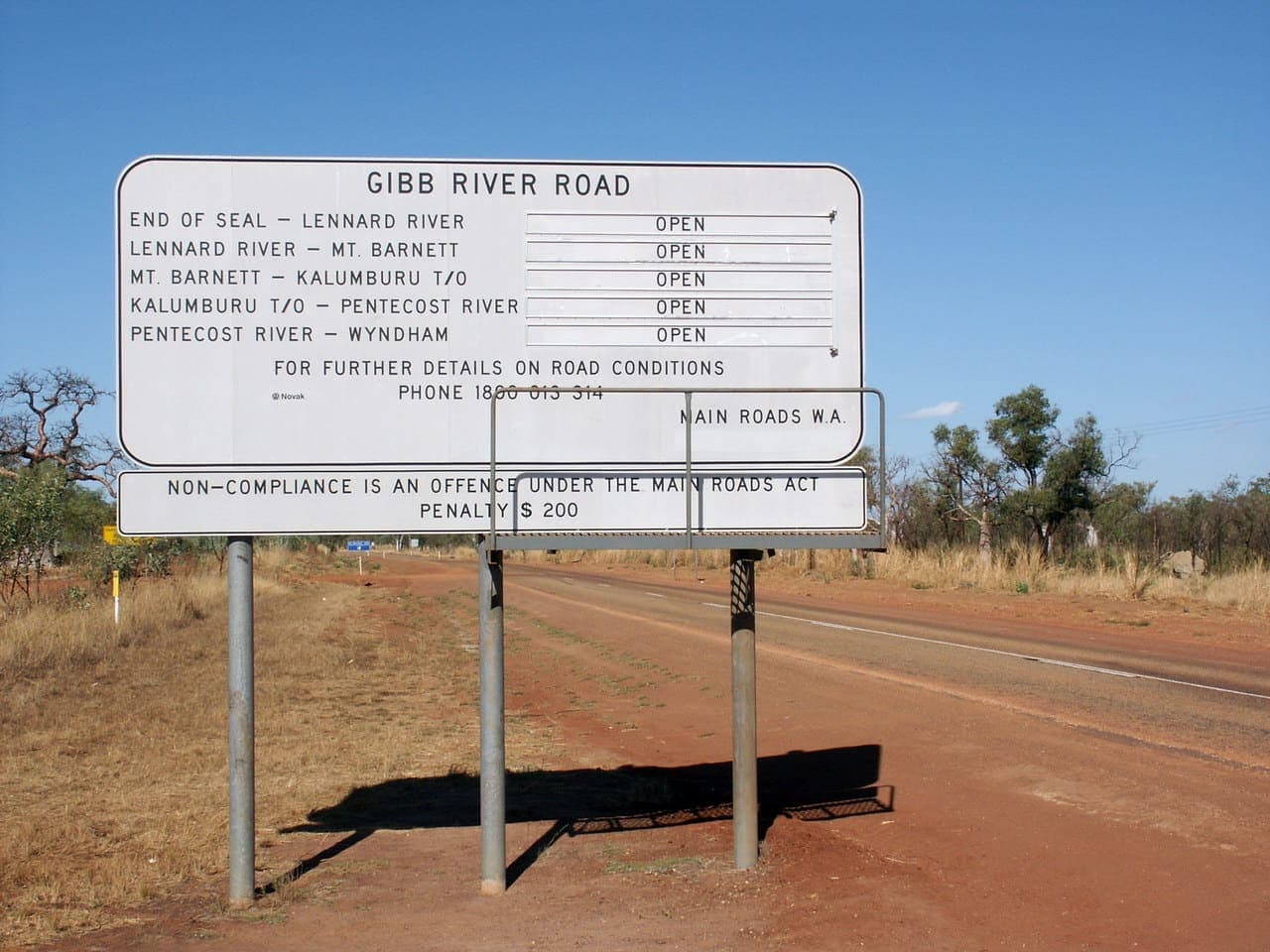
Gibb River Road, Western Australia by Nachoman-au, CC BY-SA 3.0. Source on Wikimedia Commons. Self-hosted locally. See the full image credits.
At a glance
- A Big Lap is a loop, not a race or an official itinerary.
- Time on the road matters more than a copied calendar.
- Direction is a seasonal and family-logistics choice.
- Sealed-highway laps and remote-track laps are different projects.
Planning a lap of Australia means deciding how you will circle the continent, how long you can stay away, and which roads you will treat as optional. It does not mean downloading one “ultimate” PDF and obeying it. Families who enjoy the trip usually make a handful of core decisions early and then leave room to linger.
What does planning a lap of Australia actually mean?
In conversation, the Big Lap is the around-Australia circuit that uses the main coastal and near-coastal highways, with inland shortcuts when people are short on time. Some families stay on bitumen. Others add the Gibb River Road, desert tracks or a swing through the Red Centre. Those are different risk and skill profiles. Write down which one you are actually doing.
Planning also means school, work, pets, medical access and a way to receive parts. The romance is the campfire. The work is the weekly reset: water, washing, a rest day, a grocery town.
Is a Big Lap right for you?
A lap is right if your household can travel slowly without turning every delay into a crisis, and if someone in the vehicle can handle basic roadside problems or knows when to wait for help. It is a poor fit if the only available window is a school holiday sprint through the northern wet, or if the budget only works if every night is unpaid camping. Read free camping Australia before you build a plan on free nights.
The core decisions that shape every Big Lap
Budget and cost expectations
This desk will not publish a fake average. Fuel prices move. Park fees belong to the agency that collects them. Insurance and maintenance depend on the vehicle. Build a household budget with buffers, then check live park booking pages for the places you hope to stay. If a blog or video quotes a single total, treat it as their diary, not your figure.
How long you plan to travel
How long the Big Lap takes is the question people type first. Answer it from the other direction: how long can you be away, and how many rest days do the kids need? A three-month sketch, a six-month sketch and a twelve-month sketch are different trips. The planning guide walks through those shapes without pretending one PDF fits all.
Timing is everything
Northern Australia has a wet season that closes roads and parks. Southern winters are easier for some families and harder for others. Timing is not a vibe. It is a calendar you check against Parks Australia, state park services and Main Roads WA when the Kimberley is on the list.
Clockwise vs anticlockwise – which way should you go?
Clockwise or anticlockwise changes which coast you see in which month and where you are when the north gets wet. Clockwise from the east coast often pushes people north in the dry. Anticlockwise can suit families leaving from the west or chasing a different school-term break. Read the dedicated guide; do not pick a direction because a stranger on the internet sounded confident.
Choosing a vehicle and setup
Match the vehicle to the road. If you will never leave the sealed Highway 1 loop, reliability and space may matter more than low-range gearing. If Palm Valley or the Gibb is on the list, you need a setup rated for those conditions and a plan for recovery. Roof tents, caravans and camper trailers each change where you can book and turn around. There is no trophy for the most complicated rig.
When you are ready for depth, open the full Big Lap planning guide, then the direction guide. Come back to this hub when you need the short version.
Places people stitch onto a lap
A sealed loop can stay coastal. Many families still add a Red Centre cut-through, a Top End pair of parks, or a Kimberley chapter. Each addition is a skill test. Write it on the plan as optional until the vehicle, the season and the household energy agree.
The internet loves “ten places you cannot miss”: Sydney and the Blue Mountains, a Pacific stretch, Brisbane and the Gold Coast, Cairns, Darwin and Kakadu. Those names are real. They are not a syllabus. Miss any of them without guilt if your kids need a rest town instead.
School, work and the moving household
A lap with school-age children is either a leave that matches a term, or a stretch of travel schooling you have actually prepared. This journal is not a curriculum. It is a reminder that a picnic table is a poor first day to invent one. Work-from-the-van is the same problem in adult clothing: connectivity is a place fact, not a personality.
Build a weekly reset: washing, food, a walk that is not a lookout, a call home. The reset is the trip. The lookout is the decoration.
After you choose a direction
Read the clockwise versus anticlockwise guide, then stop arguing. Spend the energy on tyres, rest days and a list of agencies. Parks Australia for commonwealth parks. State parks for the rest. Main Roads when Western Australia is under the wheels. That is planning a lap. The rest is driving.
Guides in this section
Clockwise vs anticlockwise – which way should you go?
How families choose a clockwise or anticlockwise Big Lap of Australia using seasons, school terms and city access — not folklore.
Planning a Big Lap of Australia
How to plan a family Big Lap of Australia — time, direction, vehicle honesty and budget thinking without invented totals.
Or return to the full adventure journal and open Clockwise vs anticlockwise – which way should you go?.
Questions families ask
- How long does it take to do the big lap around Australia?
- There is no single duration. A fast sealed loop can be measured in a few months; a family lap with parks and rest days is often planned across a longer season or a year.
- How much does it cost to travel the Big Lap of Australia?
- Cost is your fuel, food, campgrounds, insurance, maintenance and the pace you choose — not a published average. This journal does not invent a total.
- What is the best car to take on the Big Lap of Australia?
- The honest vehicle is the one that matches the roads you will actually drive. A reliable two-wheel drive can do the sealed loop; remote tracks change the requirement.
Pitch a family travel note
This journal welcomes considered guest posts on family camping and Australian road travel. Editorial citations stay followed; paid placements are marked sponsored.
Contact the desk about a guest post · Browse the adventure journal